

August 2017 – Volume 21, Number 2
| Title | BusyTeacher.org |
| Publisher | SureSwift Worldwide 113 Cherry Street #40306 Seattle, WA 98104 |
| Contact Information | Email: info@busyteacher.org;
Physical address: |
| Type of Product | Website with downloadable resources for teachers of English |
| Hardware Requirements | An Internet-capable computer or device, including Android and iOS tablets and smartphones |
| Software requirements | An Internet browser such as Chrome, Safari, Firefox, or the like |
| Platform | Web-based |
| Registration | No Registration Required |
| Price | Free |
Introduction
BusyTeacher.org is a website offering downloadable and printable worksheets, handouts, and resources designed for teachers of English. In addition to being able to download materials, users can upload their worksheets to the website and share them with thousands of other English teachers by clicking the “submit a worksheet” link at the bottom of every page.
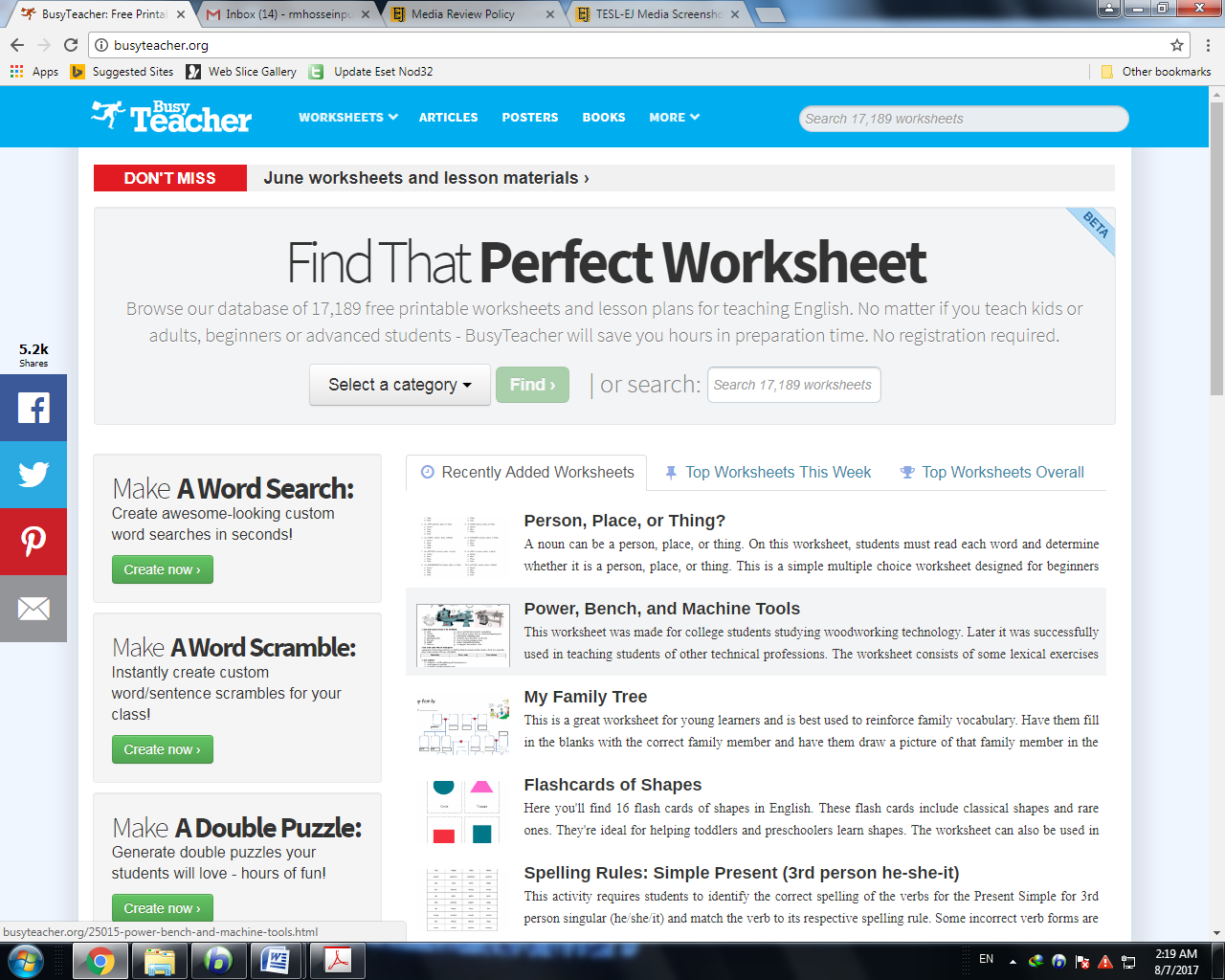
Figure 1. BusyTeacher.org homepage
First impressions
As can be seen in Figure 1, the website’s layout appears complicated, and this undermines the user-friendliness of the website. There is a large amount of text on the page, which makes it appear somewhat dense and difficult to work with. Nonetheless, many of the main functions are visible on the homepage. On the left side of the home page are several puzzle making tools: Make A Word Search, Make A Word Scramble, and Make A Double Puzzle. In the middle section of the page, recently added and popular worksheets are listed, above which are several other tools for finding resources, such as a drop down menu (see Figure 2 below) that allows users to look for materials by category (grammar, listening, pronunciation, and so on) as well as a top menu bar that allows users to search for worksheets, articles, posters, books, and more. Let us explore these resources in more detail.
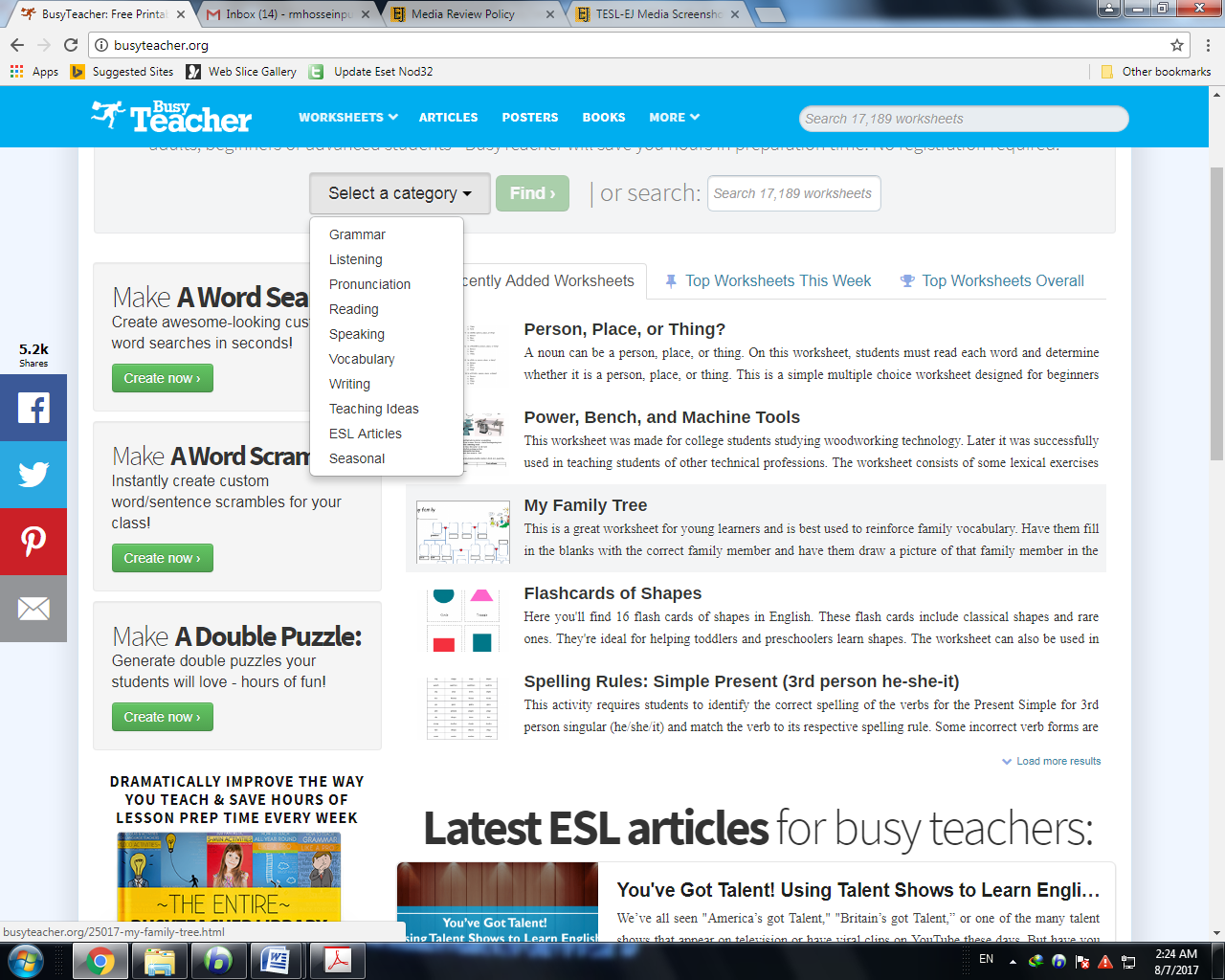
Figure 2. Major categories in BusyTeacher.org
Types of resources available at BusyTeacher.org
According to the website designers, users have access to a database of over 17,000 free printable worksheets and lesson plans for teaching English (this number increases constantly with the users’ contributions). Grammar, Listening, Pronunciation, Vocabulary, Writing, Speaking, Reading, Teaching Ideas, ESL Articles, and Seasonal are the included categories that can be selected by users when searching the database of worksheets and lesson plans. For each category, there are several subcategories that can be more specifically selected by the users. For instance, if the speaking category is selected, one has two main subcategories (role-plays and miming activities) at one’s disposal. Users can also select the appropriate proficiency level of the materials; the options are All levels, Beginner, Elementary, Pre-Intermediate, Intermediate, Upper Intermediate/Advanced, and Exam. After the level option is specified, the user will be provided with a number of different worksheets and lesson plans matching the specified proficiency level and category. Users can gain free access to the entire BusyTeacher Library, including 80 e books, through clicking on the of the library link on the left side of the home page (see Figure 3 below).

Figure 3. Articles covering “ESL Essentials”
One section of the websites is devoted to “ESL Essentials,” which includes articles covering important topics such as grammar teaching, teaching young learners, using realia and important teaching tips. This section provides users with ideas and tips about the fundamentals of English teaching. Users can also share their teaching experiences, activities, and stories with others by submitting their articles to the website.
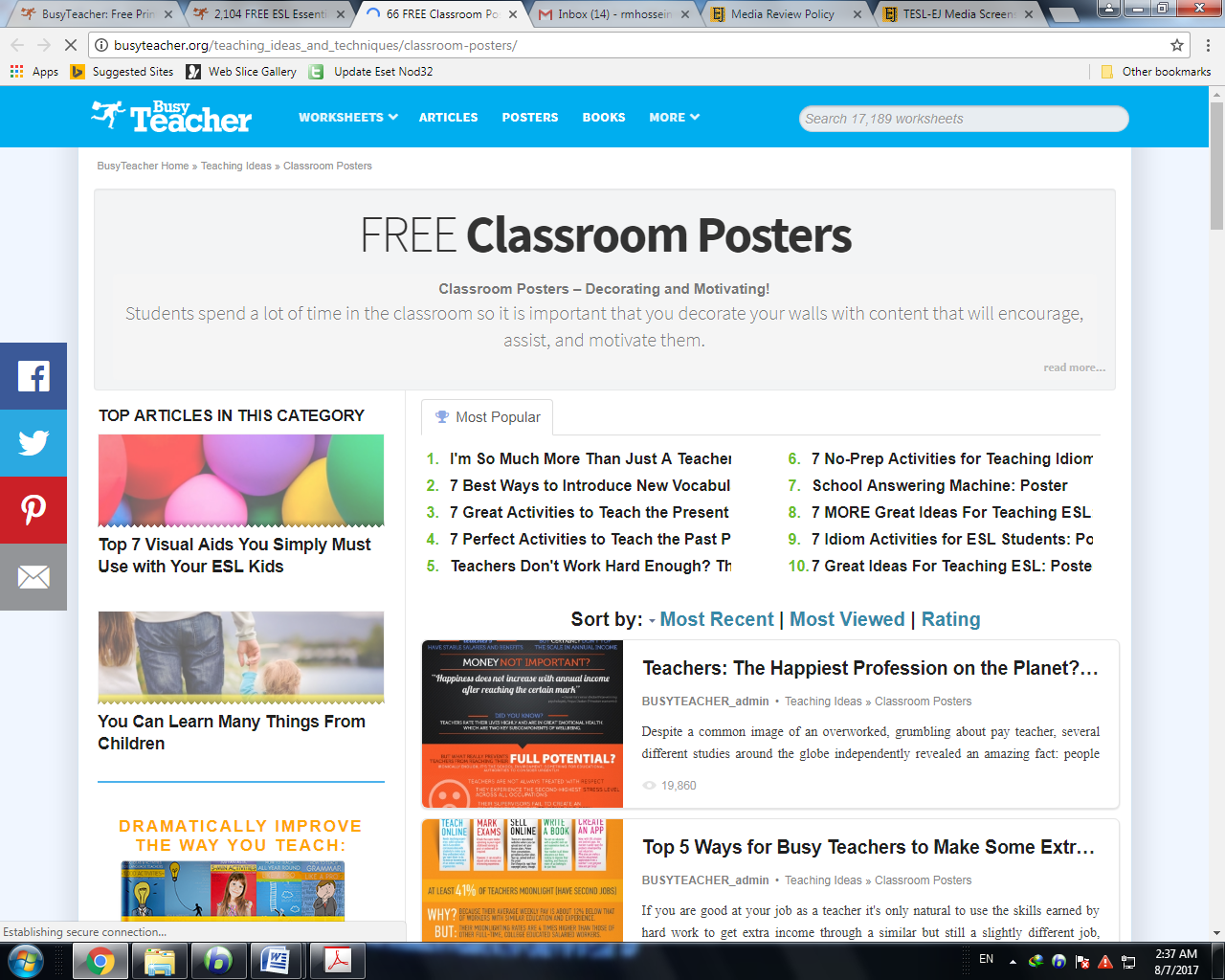
Figure 4. Classroom posters available to download
Another section of the website has been allocated to “Free Classroom Posters” (Figure 4). Since students spend a lot of time in the classroom environment, it is of paramount importance to make the classroom environment more appealing, motivating and encouraging. One way to do this could be by decorating the walls with posters and content materials that help learners learn more effectively (Freeman, 2010). Accordingly, resources in this section may help teachers enhance learners’ motivation for learning.
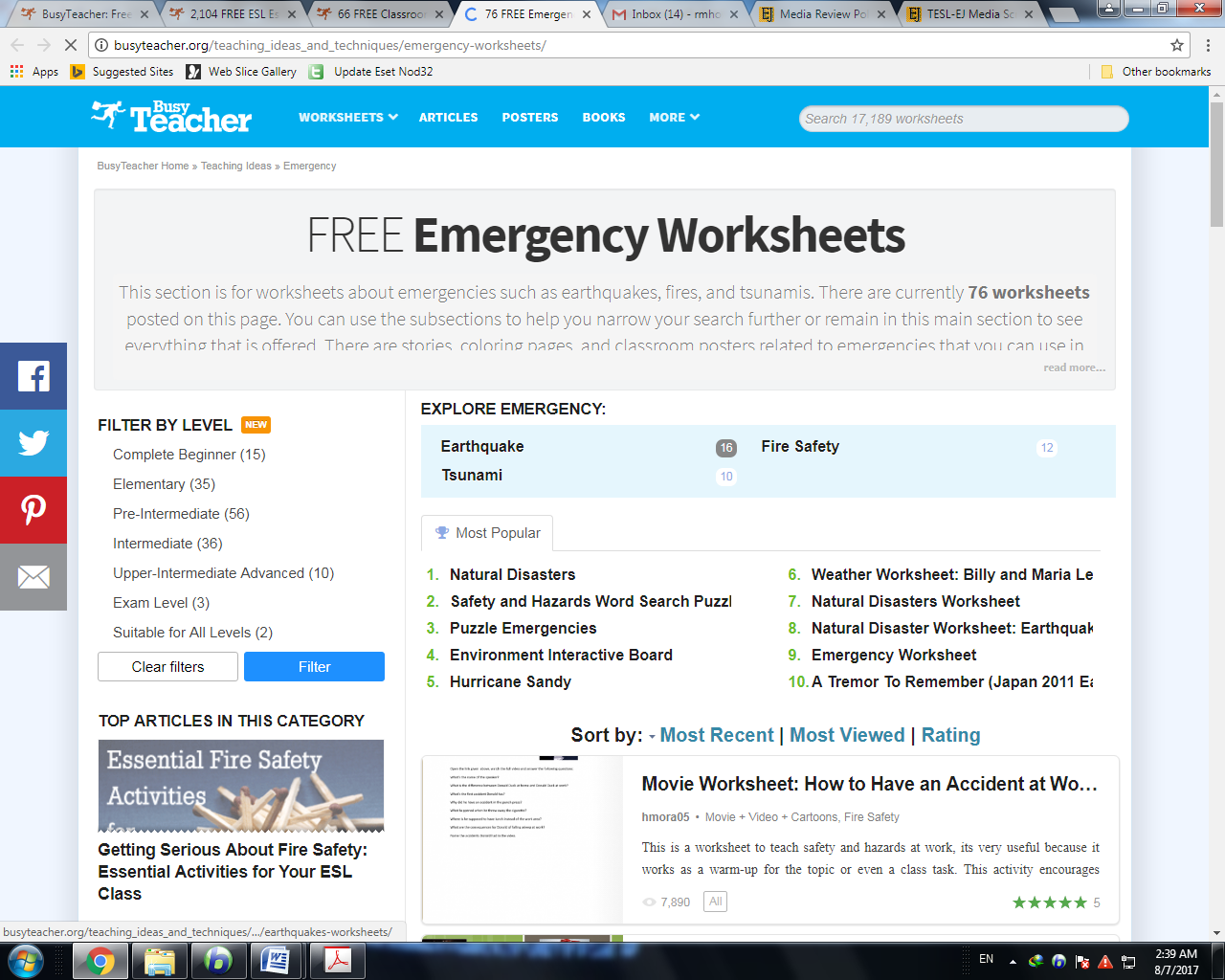
Figure 5. Emergency worksheets available at BusyTeacher.org
The “Emergency Worksheets” section (Figure 5) of the website contains worksheets about emergencies such as earthquakes, fires, and tsunamis. Users can narrow their search by choosing one of the subsections within this main section to find emergency-related stories, classroom posters, and colorful pages for their classes. The National Weather Service provides most of the emergency worksheets. For example, there is a thirteen-page story about thunderstorms including thunderstorm vocabulary and safety guidelines most appropriate for pre-intermediate learners.

Figure 6. Recycling and revising worksheets available at BusyTeacher.org
The “Recycling and Revising” section (Figure 6) of the website consists of worksheets which focus on reviewing previously learned material. Building and capitalizing upon already learned information is key to committing the information to learners’ long-term memory, so materials in this section can play an important role in reviewing and recycling information. It will likely help learners retain information longer, remember it better, and will increase their self-confidence before moving on to the next topic (Nunan, 2004; Willis & Willis, 2007). For instance, there is a fun worksheet reviewing the alphabet, numbers, and colors and this could be used to practice these basics with beginners.

Figure 7. Classroom management and discipline worksheets available at BusyTeacher.org
The website has also compiled “Classroom Management Worksheets” (Figure 7) to enable its users manage their classrooms more effectively and establish order and discipline in their classes more efficiently. According to Bailey (2006) and Senior (2006), to maintain order in English classrooms, teachers must know how to handle shy and/or recalcitrant students and how to properly encourage them. This section helps teachers to achieve this and many other discipline-related nuances.

Figure 8. Coloring pages for kids available at BusyTeacher.org
The “Coloring Pages” section (Figure 8) of the website presents various images for children to color. According to the website designers, the coloring pages can be used in combination with other exercises to keep youngsters focused, motivated, interested, and engaged in the learning process. Since teaching English as a second or foreign language to young learners can be a daunting task, it is vitally important to make the most of pictures, illustrations, and colors to keep things interesting and on track (Dornyei, 2009; Pinter, 2006).

Figure 9. The “Warmers and Fillers” section
The “Warmers and Fillers” section (Figure 9) of the website presents worksheets to assist teachers run their lessons more smoothly. Warmers provide teachers with templates for getting started on a topic and help learners prepare for the learning to come, while fillers can be used to transition from one topic to another or form one portion of a lesson to the next. The resources available at BusyTeacher.org save teachers a lot of time planning such activities.

Figure 10. The Seasonal Worksheets
The website has also created a section for seasonal activities such as holidays, cultural activities, and activities pertinent to certain periods of the year. Users have access to over 800 seasonal worksheets. For example, the winter worksheet is well suited to beginners as it introduces words like skate, ice, and snow. Such exercises and seasonal activities provide students with enjoyable tasks that align with a given time of year. This lends an element of authenticity and personalization that should reduce learner anxiety and intrinsically motivate them as these topics and tasks are related to their personal lives (Dornyei, 2009; Ellis, 2003).
Evaluation
The diverse worksheets and lesson plans compiled and supplied by the website, along with the articles, posters, and e-books can provide much needed assistance to time-crunched teachers. In addition, exposure to materials created by other teachers may help increase “teacher language awareness” (Andrews, 2007). These are the major and obvious strengths of the website.
However, the website suffers from a few drawbacks as well. In addition to the previously mentioned “busy-ness” of the website’s presentation, one important issue stems from the fact that the materials on the website are provided by users’ submissions. The administrators of the website have stated that they take no responsibility over the content of the worksheets provided by users. Thus, it is not impossible for plagiarized materials to make their way into the website’s content. Though privately owned and non-profit, the website should consider trying to exert more control over the content and holding plagiarizers accountable. Plagiarized submissions and worksheets are only removed from BusyTeacher.org if users themselves notice a copyright violation and report it; it seems likely that many plagiarized materials go unnoticed.
It is also true that the quality of the materials varies since the website relies on user submissions. The designers have included as many as worksheets as possible, but quantity sometimes outweighs quality. The website would be improved if its administrators more actively curated its contents by selecting and including only the most appropriate, effective, and carefully designed materials to include on the site.
Another minor but irritating flaw is the recurrent reference the website’s designers make to “ESL” which ignores the fact that much of the material is applicable in other contexts, including EFL settings.
Overall, there is much useful material available at BusyTeacher.org, and the website does an admirable job of categorizing it and making it easy to locate relevant worksheets and resources. However, it will be up to users to evaluate what they find there to separate the wheat from the chaff.
References
Andrews, S. (2007). Teacher language awareness. Cambridge, UK: Cambridge University Press.
Bailey, K. M. (2006). Language teacher supervision: A content-based approach. Cambridge, UK: Cambridge University Press.
Cameron, L. (2001). Teaching language to young learners. Cambridge, UK: Cambridge University Press.
Dornyei, Z. (2009). The psychology of second language acquisition. Oxford, UK: Oxford University Press.
Ellis, R. (2003). Task-based language learning and teaching. Oxford, UK: Oxford University Press.
Nunan, D. (2004). Task-based language teaching. Oxford, UK: Oxford University Press.
Pinter, A. (2006). Teaching young language learners. Oxford, UK: Oxford University Press.
Senior, R. M. (2006). The experience of language teaching. Cambridge, UK: Cambridge University Press.
Willis, D. & Willis, J. (2007). Doing task-based teaching. Oxford, UK: Oxford University Press.
About the Authors
Rasoul Mohammad Hosseinpur <rmhosseinpur gmail.com> is an assistant professor of TEFL at the University of Qom, Iran. He has published several articles in ELT-related journals. His research areas include second language writing pedagogy, interlanguage pragmatics, and L1-based instruction.
Reza Bagheri Nevisi <r.bagherinevisiqom.ac.ir> is an assistant professor of applied linguistics at the University of Qom, Iran. His research interests include task-based language teaching and language assessment in general, CALL, pedagogic task types, task complexity and speaking assessment in particular.
|
© Copyright rests with authors. Please cite TESL-EJ appropriately.
Editor’s Note: The HTML version contains no page numbers. Please use the PDF version of this article for citations. |