• Skip to primary navigation
  • Skip to main content

site logo
The Electronic Journal for English as a Second Language
search
  • Home
  • About TESL-EJ
  • Vols. 1-15 (1994-2012)
    • Volume 1
      • Volume 1, Number 1
      • Volume 1, Number 2
      • Volume 1, Number 3
      • Volume 1, Number 4
    • Volume 2
      • Volume 2, Number 1 — March 1996
      • Volume 2, Number 2 — September 1996
      • Volume 2, Number 3 — January 1997
      • Volume 2, Number 4 — June 1997
    • Volume 3
      • Volume 3, Number 1 — November 1997
      • Volume 3, Number 2 — March 1998
      • Volume 3, Number 3 — September 1998
      • Volume 3, Number 4 — January 1999
    • Volume 4
      • Volume 4, Number 1 — July 1999
      • Volume 4, Number 2 — November 1999
      • Volume 4, Number 3 — May 2000
      • Volume 4, Number 4 — December 2000
    • Volume 5
      • Volume 5, Number 1 — April 2001
      • Volume 5, Number 2 — September 2001
      • Volume 5, Number 3 — December 2001
      • Volume 5, Number 4 — March 2002
    • Volume 6
      • Volume 6, Number 1 — June 2002
      • Volume 6, Number 2 — September 2002
      • Volume 6, Number 3 — December 2002
      • Volume 6, Number 4 — March 2003
    • Volume 7
      • Volume 7, Number 1 — June 2003
      • Volume 7, Number 2 — September 2003
      • Volume 7, Number 3 — December 2003
      • Volume 7, Number 4 — March 2004
    • Volume 8
      • Volume 8, Number 1 — June 2004
      • Volume 8, Number 2 — September 2004
      • Volume 8, Number 3 — December 2004
      • Volume 8, Number 4 — March 2005
    • Volume 9
      • Volume 9, Number 1 — June 2005
      • Volume 9, Number 2 — September 2005
      • Volume 9, Number 3 — December 2005
      • Volume 9, Number 4 — March 2006
    • Volume 10
      • Volume 10, Number 1 — June 2006
      • Volume 10, Number 2 — September 2006
      • Volume 10, Number 3 — December 2006
      • Volume 10, Number 4 — March 2007
    • Volume 11
      • Volume 11, Number 1 — June 2007
      • Volume 11, Number 2 — September 2007
      • Volume 11, Number 3 — December 2007
      • Volume 11, Number 4 — March 2008
    • Volume 12
      • Volume 12, Number 1 — June 2008
      • Volume 12, Number 2 — September 2008
      • Volume 12, Number 3 — December 2008
      • Volume 12, Number 4 — March 2009
    • Volume 13
      • Volume 13, Number 1 — June 2009
      • Volume 13, Number 2 — September 2009
      • Volume 13, Number 3 — December 2009
      • Volume 13, Number 4 — March 2010
    • Volume 14
      • Volume 14, Number 1 — June 2010
      • Volume 14, Number 2 – September 2010
      • Volume 14, Number 3 – December 2010
      • Volume 14, Number 4 – March 2011
    • Volume 15
      • Volume 15, Number 1 — June 2011
      • Volume 15, Number 2 — September 2011
      • Volume 15, Number 3 — December 2011
      • Volume 15, Number 4 — March 2012
  • Vols. 16-Current
    • Volume 16
      • Volume 16, Number 1 — June 2012
      • Volume 16, Number 2 — September 2012
      • Volume 16, Number 3 — December 2012
      • Volume 16, Number 4 – March 2013
    • Volume 17
      • Volume 17, Number 1 – May 2013
      • Volume 17, Number 2 – August 2013
      • Volume 17, Number 3 – November 2013
      • Volume 17, Number 4 – February 2014
    • Volume 18
      • Volume 18, Number 1 – May 2014
      • Volume 18, Number 2 – August 2014
      • Volume 18, Number 3 – November 2014
      • Volume 18, Number 4 – February 2015
    • Volume 19
      • Volume 19, Number 1 – May 2015
      • Volume 19, Number 2 – August 2015
      • Volume 19, Number 3 – November 2015
      • Volume 19, Number 4 – February 2016
    • Volume 20
      • Volume 20, Number 1 – May 2016
      • Volume 20, Number 2 – August 2016
      • Volume 20, Number 3 – November 2016
      • Volume 20, Number 4 – February 2017
    • Volume 21
      • Volume 21, Number 1 – May 2017
      • Volume 21, Number 2 – August 2017
      • Volume 21, Number 3 – November 2017
      • Volume 21, Number 4 – February 2018
    • Volume 22
      • Volume 22, Number 1 – May 2018
      • Volume 22, Number 2 – August 2018
      • Volume 22, Number 3 – November 2018
      • Volume 22, Number 4 – February 2019
    • Volume 23
      • Volume 23, Number 1 – May 2019
      • Volume 23, Number 2 – August 2019
      • Volume 23, Number 3 – November 2019
      • Volume 23, Number 4 – February 2020
    • Volume 24
      • Volume 24, Number 1 – May 2020
      • Volume 24, Number 2 – August 2020
      • Volume 24, Number 3 – November 2020
      • Volume 24, Number 4 – February 2021
    • Volume 25
      • Volume 25, Number 1 – May 2021
      • Volume 25, Number 2 – August 2021
      • Volume 25, Number 3 – November 2021
      • Volume 25, Number 4 – February 2022
    • Volume 26
      • Volume 26, Number 1 – May 2022
      • Volume 26, Number 2 – August 2022
      • Volume 26, Number 3 – November 2022
      • Volume 26, Number 4 – February 2023
    • Volume 27
      • Volume 27, Number 1 – May 2023
      • Volume 27, Number 2 – August 2023
      • Volume 27, Number 3 – November 2023
      • Volume 27, Number 4 – February 2024
    • Volume 28
      • Volume 28, Number 1 – May 2024
      • Volume 28, Number 2 – August 2024
      • Volume 28, Number 3 – November 2024
      • Volume 28, Number 4 – February 2025
    • Volume 29
      • Volume 29, Number 1 – May 2025
      • Volume 29, Number 2 – August 2025
      • Volume 29, Number 3 – November 2025
  • Books
  • How to Submit
    • Submission Info
    • Ethical Standards for Authors and Reviewers
    • TESL-EJ Style Sheet for Authors
    • TESL-EJ Tips for Authors
    • Book Review Policy
    • Media Review Policy
    • TESL-EJ Special issues
    • APA Style Guide
  • Editorial Board
  • Support

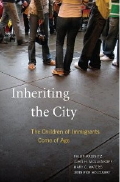
Inheriting the City: The Children of Immigrants Come of Age

September 2010 – Volume 14, Number 2

Inheriting the City: The Children of Immigrants Come of Age

Author: Philip Kasinitz, John H. Mollenkopf, Mary C. Waters, & Jennifer Holdaway (2008)  
Publisher: New York City, NY: Russell Sage Foundation
Pages ISBN Price
Pp. vii + 420 978-0674-02803-6 (hardcover) $49.95 U.S.

Inheriting the City is a detailed examination of the life of Generation 1.5 and second-generation immigrants who grew up and live in New York City. The researchers examined all facets of these immigrants’ lives including identities, origins, including family and neighborhood, backgrounds, engagement, both political and civic, discrimination, schooling, and their careers. They wanted to create an accurate picture as possible of how, and if, these generations of immigrants were assimilating to the United States and what this assimilation looked like.

The authors chose New York City due to its diverse population of people and due to the fact that several ethnic groups were robustly represented throughout the city. However, one of the issues related to this diversity is that the authors could not focus on every ethnic group represented within New York City but instead they decided to focus on only a few select ethnic groups. These included the Generation 1.5 and second-generation Chinese, Dominican, Jewish Russian, West Indian, Ecuadoran, Colombian, and Peruvian immigrants and they compared them to native white, black and Hispanic, Puerto Rican, populations. This allowed them to compare the immigrant groups against a native control group to see if the Generation 1.5 and second-generation immigrants were better or worse off than the native populations they lived among. They also compared the Generation 1.5 and second-generation groups against each other to illustrate how different ethnic groups and different factors led to different levels of success and assimilation.

The authors provide the readers with detailed statics, charts, graphics, and information on every facet of over 3,000 18 to 32 year old New Yorkers between 1998 and 2000. They did this through telephone interviews and then through face-to-face interviews with 333 of those telephoned. Inheriting the City provides an almost overwhelming amount of data and information on these groups of people. Some of this information could have been pared down which would have made this book a little easier to read. However, it is a great resource for those looking into how children of immigrants assimilate into U.S. culture and which parts, if any, of their home culture they retain and how they retain them. This book is also tailored for those working with immigrant populations whether it be in the education sector or in other sectors. It provides important information on how culture does matter, especially in larger metropolitan cities, like New York City.

As is demonstrated throughout the whole book, the main theme of Inheriting the City is that culture does matter. Many may see culture, especially in regards to immigration, to have a negative effect; whether it is increased discrimination, a sense of isolation, etc. However, the authors of this book illustrate that for Generation 1.5 and second-generation immigrants, culture and being an immigrant can actually hold a huge advantage. Basically, the advantage comes from the fact that the children of immigrants grow between two worlds.  They are part of both the ‘typical’ American culture as well as their own home culture. According to the authors, this allows these young adults to pick the best traits from both of these cultures giving them a distinct advantage.  Of course, not everyone does this but those that are smart enough to do so create a unique advantage for themselves.

The other important piece of information this book imparts is that overall Generation 1.5 and second-generation immigrants are doing better than their immigrant parents. This is due to a variety of factors, including access to education, the neighborhoods the live in, and their family composition, among others.  In addition, the researchers found that the children of Chinese immigrants are experiencing the most rapid and dramatic upward mobility. However, all groups earn equal income to or more than their native control groups. Interestingly, it should be noted that this does not mean that all immigrant populations under review are given equal access to services or have assimilated at the same rate or in the same manner. Many still experience discrimination, receive substandard education, participate in gang activity, among other inequalities; but compared to their immigrant parents they are doing much better.

Overall, Inheriting the City provides an interesting insight into the Generation 1.5 and second-generation immigrant population of New York City.  The majority of these young adults view themselves as New Yorkers and not necessarily as Chinese, Dominican, etc., partially demonstrating their assimilation to living in a mixed society. However, this book also represents a detailed examination of how this assimilation is currently taking place, the importance of it, and what factors have affected the transformation from first generation immigrant to assimilated Generation 1.5 or second-generation citizen making it an important read for ESL/EFL practitioners as well as anyone who works with immigrant populations.

Reviewed by

Mandy Reinig
Penn State Altoona, USA
<arr14atmarkpsu.edu>

© Copyright rests with authors. Please cite TESL-EJ appropriately.

Editor’s Note: The HTML version contains no page numbers. Please use the PDF version of this article for citations.

© 1994–2026 TESL-EJ, ISSN 1072-4303
Copyright of articles rests with the authors.