

June 2011 – Volume 15, Number 1
Networked Collaborative Learning: Social Interaction and Active Learning |
|||
| Author: | Guglielmo Trentin (2010) | 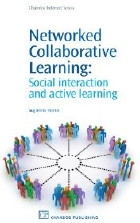 |
|
| Publisher: | Oxford, UK: Chandos Publishing | ||
| Pages | ISBN | Price | |
|---|---|---|---|
| 166 pages | 978 1 84334 501 5 (paper) | £42.75 UK | |
The sustainability of Networked Collaborative Learning (NCL) is a key topic of discussion amongst the institutions where it has been or may potentially be introduced. Trentin’s book delineates a framework for NCL sustainability. After comparing NCL with other Technology Enhanced Learning (TEL) approaches and discussing the possible reasons for adopting it (Chapter 1), a multidimensional model for the sustainability of NCL is proposed. The model is characterized by four dimensions: pedagogical approaches (Chapter 2), e-teacher professional development (Chapter 3), instructional design models (Chapter 4) and evaluation/assessment approaches (Chapter 5). The four-dimensional model in developing NCL can be taken as a roadmap to understand the book. Each of these dimensions is examined on the basis of the author’s direct experience gained through applying NCL to his university teaching. The insightful and profound scrutiny on NCL in this book is of great significance for educators, especially teachers and will-be teachers who are puzzled at how to adapt themselves to meeting the needs of the future society and educating the 21st century students properly.
The pedagogical dimension describes the defining characteristics of NCL. This chapter explores the philosophy underpinning NCL and the paradigm shift it involves. The comparative way of presenting NCL with traditional learning in this chapter propels teacher readers to continually reflect on the traditional approaches to teaching while reading the chapter and leads them gradually to a shift from current belief of passive, content-based pedagogy to more interactive and constructive one proposed in NCL.
The professional dimension rationalizes the need to develop teacher professionalism so as to be qualified for the multiple roles as subject expert, instructional designer, classroom teacher, e-teacher and e-moderator in NCL scenario. The explosion of new technologies misleads teacher training to taking technological know-how as their major objective. One of the great contributions of this chapter lies in that the author explicitly points out the sustainability of NCL goes much beyond training teachers to practice traditional teaching with new technical skills. The objective of professional training is to enlighten teachers to “be capable of making autonomous and informed decision about what e-teaching strategies will prove most effective for meeting the needs at hand” (p. 54).
The instructional design dimension addressed the coherent and effective designing of NCL course. A detailed list of every aspect of course designing is covered from the macro-level consideration of aims, objectives, course prerequisites, course flexibility, educational strategies, and evaluation criteria to the micro-level designing of e-tivities and e-content. Personally, I believe this chapter is a very good guideline for any NCL course designing no matter whether the designer is a novice or not.
As to the evaluation and assessment dimension in NCL, the author starts from basic concepts like the purpose of evaluation, object of evaluation, evaluation tools, presentation and interpretation of results to the specific guidance on different types of evaluation available in NCL. I really like the idea of the author to offer readers a repertoire of evaluation methods and tools so that different users can choose different methods most suitable for their own purposes. It is also outstanding originality of the author to turn those intricate, invisible details of students’ performance into measurable and operable variables in evaluation so that teachers can make comparatively objective evaluation on individual student’s development, his contribution to and participation in group work and the level of cooperation within groups.
The topic discussed in this book is a prompt response to readers’ perplexity with the recent advances in e-learning technology and practice. On the one hand, computers and networking technologies claim to support learning in a more “personalized, flexible, portable, and on-demand manner” (Zhang, et. al., 2004); on the other hand, quite a few teachers who have practiced e-learning share the same disappointment at students’ online discussion (Shedletsky, 2010 P 2; Wang & Ip, 2010) and the similar experiences of delivering “multimodality” which actually disrupts learning (Kaltenbacher, 2004; Sato & Suzuki, 2010). Trentin’s book fits right in by offering insightful perception into the essence of networked learning and useful guidelines in designing and conducting such kind of learning. His book is more like a mirror. While reading it, I have a much clearer idea of what’s going wrong in my practice of networked learning on my students in China. I can’t wait to have another try next semester because I know the next time practice will receive better effects with Trentin guiding me.
The way to present NCL with the comparison to conventional content-based face-to-face learning raises readers’ strong awareness of the characteristics of NCL. It forces readers to reflect on their traditional approach of pedagogy in the online learning environment, which is undoubtedly a strategic way to raise readers’ keen appreciation of the nature of collaborative interactions in NCL. In this way, the author prepares readers well enough to accept his presentation of desired NCL and the demanding effort required of readers.
Other sure-to-be-talked-about merits of this book are the examples used in the four-dimension chapters. The author structures each chapter from theorization (describe theoretical settings), to application (apply theories in expounding the gist for each dimension of NCL) to exemplification (illustrate different dimensions of NCL with concrete examples). The well-chosen examples are quite necessary and timely complements to previous elaboration. All these examples are indispensable complement to help readers concretize their understanding of the whole NCL landmark.
However, some teachers who are greatly inspired by this book and want to try NCL designing instantly may find themselves somewhat frustrated in realizing certain technical function if they are not that computer savvy, because no detailed instruction on technical know-how is covered in this book. If readers have little idea of network resources and services such as learning platforms, group wares and freely available web-based services, their freedom to run online courses will be extremely limited. However, this is good evidence to support author’s argumentation in Chapter 3 that current teacher education and professional development should take TEL into consideration (p. 51).
Moreover, although the comparison of traditional pedagogy with e-pedagogy is a great advantage of this book as I mentioned above, it may also be possible to render readers to take a black-and-white view towards the two types of pedagogy and interpret them as absolutely incompatible. We have to admit the traditional way of teaching has its own merits to go through the test of time. The author’s intention here is to remind teachers of the danger of directly transferring classroom practice to the web. If readers don’t bear this intention in mind, it is possible for them to go to extremes and discard everything related to traditional teaching practice.
To conclude, with all these possible shortcomings, this book is still worthwhile for educators, especially teachers. It is a useful guidance for teachers to be informed about NCL in the midst of transition from classroom pedagogy to e-pedagogy. With the widespread of computer and networking technologies, what is discussed in this book is also insightful for government organizations, and educational institutions to understand the e-learning phenomenon and make strategic decisions on how to adopt e-learning techniques in their unique environments.
References
Kaltenbacher, M. (2004). Multimodality in language teaching CD-ROMs. In Ventola, E., C. Charles, & M. Kaltenbacher (Eds.), Perspectives on multimodality (pp. 119-136). Amsterdam, Netherlands: John Benjamins Publishing Company.
Shedletsky, L. (2010). Does online discussion produce increased interaction and critical thinking? In Shedletsky, L. & J. E. Aitken (Eds.), Cases on online discussion and interaction: Experiences and outcomes (pp. 1-38). New York, USA: Information Science Reference.
Sato, T., & Suzuki, A. (2010). Do multimedia-oriented visual glosses really facilitate EFL vocabulary learning?: A comparison of planar images with three-dimensional images. Asian EFL Journal, 12 (4), 160-172. Retrieved from
http://www.asian-efl-journal.com/PDF/Volume-12-Issue-4-Sato&Suzuki.pdf
Wang, M., & Ip, K. I. (2010). Tasks and challenges faced by teachers in handling an online project. Asian EFL Journal, 12 (4), 143-159. Retrieved from http://www.asian-efl-journal.com/PDF/Volume-12-Issue-4-Wang&Ip.pdf
Zhang, D., Zhao, J. L., Zhou, L. & Nunamaker, J. F. (2004). Can e-learning replace classroom learning? Communications of the ACM, 47(5), 75-79.
Reviewed by
Wang Weihong, China University of Geosciences, China
<luciawwh sina.com>
|
© Copyright rests with authors. Please cite TESL-EJ appropriately.
Editor’s Note: The HTML version contains no page numbers. Please use the PDF version of this article for citations. |