• Skip to primary navigation
  • Skip to main content

site logo
The Electronic Journal for English as a Second Language
search
  • Home
  • About TESL-EJ
  • Vols. 1-15 (1994-2012)
    • Volume 1
      • Volume 1, Number 1
      • Volume 1, Number 2
      • Volume 1, Number 3
      • Volume 1, Number 4
    • Volume 2
      • Volume 2, Number 1 — March 1996
      • Volume 2, Number 2 — September 1996
      • Volume 2, Number 3 — January 1997
      • Volume 2, Number 4 — June 1997
    • Volume 3
      • Volume 3, Number 1 — November 1997
      • Volume 3, Number 2 — March 1998
      • Volume 3, Number 3 — September 1998
      • Volume 3, Number 4 — January 1999
    • Volume 4
      • Volume 4, Number 1 — July 1999
      • Volume 4, Number 2 — November 1999
      • Volume 4, Number 3 — May 2000
      • Volume 4, Number 4 — December 2000
    • Volume 5
      • Volume 5, Number 1 — April 2001
      • Volume 5, Number 2 — September 2001
      • Volume 5, Number 3 — December 2001
      • Volume 5, Number 4 — March 2002
    • Volume 6
      • Volume 6, Number 1 — June 2002
      • Volume 6, Number 2 — September 2002
      • Volume 6, Number 3 — December 2002
      • Volume 6, Number 4 — March 2003
    • Volume 7
      • Volume 7, Number 1 — June 2003
      • Volume 7, Number 2 — September 2003
      • Volume 7, Number 3 — December 2003
      • Volume 7, Number 4 — March 2004
    • Volume 8
      • Volume 8, Number 1 — June 2004
      • Volume 8, Number 2 — September 2004
      • Volume 8, Number 3 — December 2004
      • Volume 8, Number 4 — March 2005
    • Volume 9
      • Volume 9, Number 1 — June 2005
      • Volume 9, Number 2 — September 2005
      • Volume 9, Number 3 — December 2005
      • Volume 9, Number 4 — March 2006
    • Volume 10
      • Volume 10, Number 1 — June 2006
      • Volume 10, Number 2 — September 2006
      • Volume 10, Number 3 — December 2006
      • Volume 10, Number 4 — March 2007
    • Volume 11
      • Volume 11, Number 1 — June 2007
      • Volume 11, Number 2 — September 2007
      • Volume 11, Number 3 — December 2007
      • Volume 11, Number 4 — March 2008
    • Volume 12
      • Volume 12, Number 1 — June 2008
      • Volume 12, Number 2 — September 2008
      • Volume 12, Number 3 — December 2008
      • Volume 12, Number 4 — March 2009
    • Volume 13
      • Volume 13, Number 1 — June 2009
      • Volume 13, Number 2 — September 2009
      • Volume 13, Number 3 — December 2009
      • Volume 13, Number 4 — March 2010
    • Volume 14
      • Volume 14, Number 1 — June 2010
      • Volume 14, Number 2 – September 2010
      • Volume 14, Number 3 – December 2010
      • Volume 14, Number 4 – March 2011
    • Volume 15
      • Volume 15, Number 1 — June 2011
      • Volume 15, Number 2 — September 2011
      • Volume 15, Number 3 — December 2011
      • Volume 15, Number 4 — March 2012
  • Vols. 16-Current
    • Volume 16
      • Volume 16, Number 1 — June 2012
      • Volume 16, Number 2 — September 2012
      • Volume 16, Number 3 — December 2012
      • Volume 16, Number 4 – March 2013
    • Volume 17
      • Volume 17, Number 1 – May 2013
      • Volume 17, Number 2 – August 2013
      • Volume 17, Number 3 – November 2013
      • Volume 17, Number 4 – February 2014
    • Volume 18
      • Volume 18, Number 1 – May 2014
      • Volume 18, Number 2 – August 2014
      • Volume 18, Number 3 – November 2014
      • Volume 18, Number 4 – February 2015
    • Volume 19
      • Volume 19, Number 1 – May 2015
      • Volume 19, Number 2 – August 2015
      • Volume 19, Number 3 – November 2015
      • Volume 19, Number 4 – February 2016
    • Volume 20
      • Volume 20, Number 1 – May 2016
      • Volume 20, Number 2 – August 2016
      • Volume 20, Number 3 – November 2016
      • Volume 20, Number 4 – February 2017
    • Volume 21
      • Volume 21, Number 1 – May 2017
      • Volume 21, Number 2 – August 2017
      • Volume 21, Number 3 – November 2017
      • Volume 21, Number 4 – February 2018
    • Volume 22
      • Volume 22, Number 1 – May 2018
      • Volume 22, Number 2 – August 2018
      • Volume 22, Number 3 – November 2018
      • Volume 22, Number 4 – February 2019
    • Volume 23
      • Volume 23, Number 1 – May 2019
      • Volume 23, Number 2 – August 2019
      • Volume 23, Number 3 – November 2019
      • Volume 23, Number 4 – February 2020
    • Volume 24
      • Volume 24, Number 1 – May 2020
      • Volume 24, Number 2 – August 2020
      • Volume 24, Number 3 – November 2020
      • Volume 24, Number 4 – February 2021
    • Volume 25
      • Volume 25, Number 1 – May 2021
      • Volume 25, Number 2 – August 2021
      • Volume 25, Number 3 – November 2021
      • Volume 25, Number 4 – February 2022
    • Volume 26
      • Volume 26, Number 1 – May 2022
      • Volume 26, Number 2 – August 2022
      • Volume 26, Number 3 – November 2022
      • Volume 26, Number 4 – February 2023
    • Volume 27
      • Volume 27, Number 1 – May 2023
      • Volume 27, Number 2 – August 2023
      • Volume 27, Number 3 – November 2023
      • Volume 27, Number 4 – February 2024
    • Volume 28
      • Volume 28, Number 1 – May 2024
      • Volume 28, Number 2 – August 2024
      • Volume 28, Number 3 – November 2024
      • Volume 28, Number 4 – February 2025
    • Volume 29
      • Volume 29, Number 1 – May 2025
      • Volume 29, Number 2 – August 2025
      • Volume 29, Number 3 – November 2025
      • Volume 29, Number 4 – February 2026
  • Books
  • How to Submit
    • Submission Info
    • Ethical Standards for Authors and Reviewers
    • TESL-EJ Style Sheet for Authors
    • TESL-EJ Tips for Authors
    • Book Review Policy
    • Media Review Policy
    • TESL-EJ Special issues
    • APA Style Guide
  • Editorial Board
  • Support

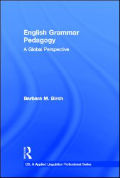
English Grammar Pedagogy: A Global Perspective

November 2014 – Volume 18, Number 3

English Grammar Pedagogy: A Global Perspective

Author: Barbara M. Birch (2014)  
Publisher: New York, NY: Routledge
Pages ISBN Price
319 pages 978-0-415-88585-0 $44.44 USD

Grammar consists of meaningful structures and patterns regarding speakers’ status, geographic location, and pedagogical context. As learning grammar takes place in a sociocultural context, global perspectives cannot be ignored, either. As Larsen-Freeman (2009) argued, “The pedagogic approach to the teaching of grammar in various parts of the world differs, depending not only on different grammatical complexities, but also on the pedagogic traditions” (p. 522). In addition, Hinkel (2006) asserted, “the analyses of large spoken and written English language corpora have allowed much insight into how native speakers of English use language features in real life and across various dialects” (p. 112). Therefore, in this book, Birch emphasizes the legitimacy of different varieties of English, especially World Englishes.

In the preface, Birch outlines the contents of this book, and then examines the grammatical issues by paying careful attention to both learners and teachers. She presents a balanced overview of the traditional views of teaching and learning grammar, and explains the new trends on these traditional perspectives. Throughout the book, she uses graphic organizers, figures, and other important visual aids to clarify the concepts as well as interactive critical thinking tasks labeled study, discussion, essay questions, and activity questions. By means of these questions, this book offers a valuable opportunity for students and teachers to review the content and to fully comprehend the material. Each of the three parts begins with a review, and every chapter starts with a thought-provoking quote from a famous linguist.

Part I brings a contemporary take to the traditional approach to teaching grammar. It suggests that language learning is achieved both through interactions within the sociocultural contexts and also explicitly through instruction. Chapter 1 focuses on English as a global language and offers a framework encapsulating “language constellations, intentional diffusion and resistance” as an outcome of imperialism and colonialism as well as the concentric circles of English as a formal, local and regional language. Chapter 2 proposes new perspectives and constructions on traditional grammar theories. This chapter also introduces Construction Grammar—an approach that integrates usage and exposure with the general cognitive processes. Chapter 3 discusses how language learners construct sociocultural identities and explains specific factors in the construction of learner identities such as language awareness, metalinguistic awareness, bilingualism, multicompetence as well as the factors in language learning and their relation within each other such as interaction, focus on form, uptake, scaffolding, natural order, priming, automatization, and practice. Chapter 4 ties everything together by unifying the theoretical methods and more practical ones, as one method does not fit all learner profiles and not all methods are practical for the real classroom. In this way, Birch succeeds in combining a great number of methods that are valuable to teachers in teaching English.

Part II deals with the general consensus regarding the norms and their analysis at different levels such as morphology, word formations, phrases, sentences, and discourse levels. While Chapter 5 is more theoretical, Chapter 6 takes a more practical approach, and defines what a word is and distinguishes resource (syntactic categories of words) and system elements (components of discourse clarifying the relationships of words in the long term memory). In Chapters 7 through 11, Birch discusses language teaching at the phrase, verb and sentence level by focusing on colligations (“abstract grammatical structures closely related to the open choice principle”) as well as descriptive and referential roles of these. Chapter 12 concludes this part of the book by creating discourse awareness not only by referring to grammar but also touching on the communicative functions of lexical bundles and expressions.

Part III has two chapters that focus on unstable aspects of grammar such as colloquial language items, slang versions, and local and regional grammars. This part slides smoothly from Academic English to different dialects and diglossia, which are seen as fluid forms of English.

This book is a good guide for pedagogical purposes on teaching grammar. Bringing a different perspective to the world of grammarians, Birch fills important gaps for those of us who want to teach grammar not only by looking at the stable forms but also by considering the regional and dialectal versions. Perhaps including the samples of these versions would have been helpful, but this book does include a substantial bibliography and a useful index. Overall, Birch has written a valuable book that addresses important issues in teaching grammar with a new perspective.

References

Hinkel, E. (2006). Current perspectives on teaching the four skills. TESOL Quarterly, 40 (1), 109-131.

Larsen-Freeman, D. (2009). Teaching and testing grammar. In M. Long & C. Doughty (Eds.) The Handbook of Language Teaching (pp. 518-542). Malden, MA: Blackwell.

Reviewed by
Hilal Peker-Ozbay
University of Central Florida, USA
<Hilal.Pekeratmarkucf.edu>

© Copyright rests with authors. Please cite TESL-EJ appropriately.

Editor’s Note: The HTML version contains no page numbers. Please use the PDF version of this article for citations.

© 1994–2026 TESL-EJ, ISSN 1072-4303
Copyright of articles rests with the authors.