

May 2017 – Volume 21, Number 1
Teaching Children How to Learn |
|||
| Authors: | Gail Ellis & Nayr Ibrahim (2015) | 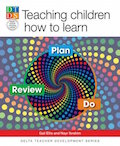 |
|
| Publisher: | Peaslake, UK: Delta | ||
| Pages | ISBN | Price | |
|---|---|---|---|
| 176 pages | 978-1-905085-86-6 | $21.99 USD | |
Teaching Children How to Learn is a practical guide to assist language instructors of young learners in effectively imparting metacognitive knowledge and learning strategies. Overall, it is based on the ‘plan do review’ learning cycle (Hohmann, Weikart, & Epstein, 2008), where students are made aware of the purpose of the lesson, learn the material, and then practice to reinforce their understanding. The cycle is expanded and is a crucial aspect not only of ten pedagogical principles that recur throughout the book, but also of the book itself. These principles form the backbone of the lessons and are key to helping children recognize features of the learning process. By applying them in the classroom, students will gain the skills to understand how they are learning and will then possess the tools to use that knowledge for more effective scholarship in the future.
The book is well-organized, and both the design and format help with locating important information. Section headings are bolded, in larger print, and have a light gray background so as to stand out when scanning the page. Subheadings are also in bold, and there are many bulleted lists. These features make it very easy to find specific information without having to skim through a large amount of text. For a teacher without a lot of free time, this is key to being able to quickly brush up on a concept. There is no index, but a meticulously organized table of contents helps with locating information, activities, or areas for self-reflection.
A key feature of Teaching Children How to Learn is a class mascot in the form of a likeable worm named Wilbur. Wilbur is a guide who gives instructions or advice to students as they complete review activities. In addition, worksheets and activity records that correspond to each lesson are included in a section called ‘Wilbur’s toolkit’.
Many resources (lesson plans and teaching strategies) can be photocopied directly from the book. Materials in two additional sections (‘Wilbur’s toolkit’ and the ‘Teacher’s toolkit’) are shown four to a page, and full-sized (A4) PDFs are available as free downloads on the publisher’s website (www.deltapublishing.co.uk/resources).
The book is divided into three main sections (Parts A, B, and C), which, from the teacher’s viewpoint, correspond with ‘Plan’, ‘Do’, and ‘Review’. Part A (‘Plan’) provides a comprehensive, but concise theoretical background on learning how to learn. This is necessary in order to effectively design and carry out lessons. Important concepts are defined and discussed (e.g., metacognitive awareness and learning strategies), and a number of characteristics and examples are given. In stating the case for children to learn how to learn, teachers’ opinions and concerns are provided, along with comments and responses to them. The chapter also details explicit roles the teacher should play at various times (affective, procedural, behavioral, interactive), and Wilbur the Worm is introduced and personified to assist with some of these roles. There is a detailed explanation of the ten pedagogical principles (e.g., English Language Portfolio, children’s voices, informed activities) upon which the lessons and activities in the following section are based. All information is presented in a brief, easy-to-read format, with a bibliography for further reading.
Part B (‘Do’) provides examples of lesson plans that utilize the concepts and principles from the first section, while incorporating different types of learning strategies (metacognitive, cognitive, and/or socioaffective). There are verbal (listen and respond) and non-verbal (read and respond) activities, which correspond to one of the pedagogical principles. Each lesson plan is presented on a double page spread with clear headings for the different parts. The left side of the double spread includes information for the teacher and steps for carrying out the lesson. While lessons are based on the ‘plan do review’ learning cycle, they also include an optional ‘do more’ step that can serve to increase students’ learning, allow them to work individually, and encourage originality and creativity in completing the tasks.
The right-hand page is comprised of review activities that help the teacher to establish a routine (one of the pedagogical principles), as each is centered on the following five questions:
- What did you do?
- What did you learn?
- How did you learn?
- How well did you do?
- What do you need to do next?
These are followed by the ‘Share’ step, which not only encourages children to show their work to family members (another pedagogical principle), but the worksheets (included in ‘Wilbur’s toolkit’) also have a space to write family members’ comments. This takes the learning process beyond the classroom and into the home. Moreover, students are encouraged to complete this step in the home language, thereby reinforcing content learned in school in one language by discussing it in another.
The ‘Review’ section (Part C) is dedicated to professional development by assisting the teacher with self-reflection on the pedagogical principles, teaching strategies, ongoing development strategies, and self-assessment. Hohmann et al.’s (2008) learning cycle is revisited, however, it is now in a ‘plan do review share’ format. Just as students are encouraged to share their work with parents, teachers can reflect and discuss outcomes with colleagues. This additional step facilitates collaboration between professionals in order to gain innovative ideas. Finally, the ‘Teacher’s toolkit’ includes possible keys, as well as various templates.
Even though the book is dedicated to teaching children, many of the principles, strategies, and areas for self-assessment are applicable to language teachers of any age or level, from preschool through higher education. Teaching principles are generally the same at any level, and while some of the questions or points of reflection might need to be adapted for older or more advanced students, this section provides a useful basis to think about one’s own teaching and further improve through reflection and cooperation.
While the authors are aware that access to technology varies throughout the world, worksheets for students and teachers are only available online. Therefore, ‘Wilbur’s toolkit’ activities could only be used by teachers with access to the internet and a printer. While many Asian countries are technologically advanced, schools (especially elementary) lag far behind in terms of available technology. Therefore, it would be more useful to include the worksheets on a full page or in an accompanying text.
Overall, Teaching Children How to Learn is an excellent resource for any language instructor. In implementing the strategies and activities, teachers are able to equip children with the knowledge of how learning occurs, which can then extend beyond the classroom and travel with them into the future. Metacognitive awareness is therefore key to the continuous process of language acquisition. In addition to being able to communicate in English, second language learners are able to discuss their learning, as they are centralized and are given a voice. Finally, the book is important not only in teaching children how to learn, but also in teaching ESL teachers how to teach through innovative self-assessment activities. The reflective section makes the book especially useful for a language instructor’s professional development, indirectly helping future students to become even better learners.
Reference
Hohmann, M., Weikart, D. P., & Epstein, A. S. (2008). Educating young children: Active learning practices for preschool and child care programs (3rd ed.). Ypsilanti, MI: High/Scope Press.
Reviewed by
Robert J. Werner
Ryutsu Keizai University, Japan
<rjwerner gmail.com>
| © Copyright rests with authors. Please cite TESL-EJ appropriately. Editor’s Note: The HTML version contains no page numbers. Please use the PDF version of this article for citations. |