

May 2020 – Volume 24, Number 1
Qualitative Research Topics in Language Teacher Education |
|||
| Author: | Gary Barkhuizen (Ed.) (2019) | 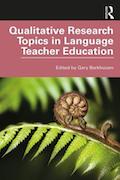 |
|
| Publisher: | New York: Routledge | ||
| Pages | ISBN | Price | |
|---|---|---|---|
| Pp. 224 | 978-1-138-61814-5 (paper) | $47.95 U.S. | |
In Qualitative Research Topics in Language Teacher Education, Gary Barkhuizen assembles a host of researchers in the field of language teacher education (LTE), aiming not only to highlight current topics in second, foreign, and multilingual LTE but also to provide practical advice from seasoned educators and researchers on developing a research topic in LTE. The book includes guidance in pairing qualitative research methods with suggested research topics for readers who are already teaching, who are training to become language teachers, or who are interested in or already pursuing graduate studies.
The book covers a breadth of research areas relevant to language teachers and LTE researchers. After the introduction (Chapter 1), each chapter focuses on a particular theme or area of research in LTE. Chapter 2 addresses topics related to working with LTE doctoral dissertation writers. Chapter 3 is based on the theme of “going beyond familiarity” in LTE research, suggesting that researchers draw on other disciplines or explore commonly studied topics in less traditional settings. Contributors also focus on areas of research in LTE that include learning to teach languages (Chapter 4) and language ideologies (Chapter 5). Other research areas, such as language teacher learning and professional development (Chapters 6 and 7), language teacher psychology (Chapter 8), emotions in language teaching (Chapters 9, 10, and 11), and language teacher identities (Chapters 12 and 13) are addressed. Some authors offer topics from a sociocultural perspective (Chapters 14 and 15), as well as topics for second language academic writing (Chapters 16, 17, and 18), English for academic purposes (Chapter 19), and race and gender in LTE (Chapters 20 and 21, respectively). In addition, English as an international language (Chapter 22), multilingualism (Chapters 23, 24, and 25), and teacher study abroad (Chapters 26 and 27) are presented as LTE research areas. Action research in LTE is highlighted (Chapters 28, 29, and 30), along with topics related to issues in language and content instruction (Chapter 31), LTE in primary and secondary education (Chapter 32), task-based teaching and assessment (Chapter 33), approaches in language teaching (Chapter 34), and strategy instruction (Chapter 35). Although some chapters address similar research areas, each chapter provides a unique perspective to the research topics. In the few cases of redundant topics, each chapter serves to reinforce the need for said research.
Each of the 34 chapters following the introduction is formatted to include the same five sub-sections. The first sub-section is a biographical statement introducing the author(s). Nearly all of the biographical statements include reference to the author’s experience as both an educator and LTE researcher. For instance, Maria Ruohotie-Lyhty (Chapter 13) shares how her career of 15 years as a language teacher has contributed to her research about language teacher identity in her present role as a language teacher researcher and teacher educator.
The second sub-section of each chapter is devoted to strategies for choosing a research topic. Each author’s presentation of suggestions varies, ranging from numbered lists to narratives about the author’s experiences. A majority of the authors emphasize advice applicable to any researcher. For example, multiple authors advise choosing a topic that the researcher cares about. Several authors suggest reading existing literature deeply to identify research gaps. Some chapter authors provide suggestions particular to their research area. For instance, Chapter 7 (written by Simon Borg) provides research selection considerations related to professional development initiatives, the overarching theme of the chapter. Similarly, in Chapter 12 (written by Bonny Norton and Peter de Costa), the authors center their strategies specifically on steps for arriving at a research topic in the area of language teacher identity in teacher education.
The third sub-section of each chapter is a description of five proposed research topics from a particular focus in LTE research. For instance, Chapter 28 (written by Anne Burns) offers topics related to action research, which include research into educators’ identified classroom issues (e.g., materials or approaches to teaching), the process of teachers becoming researchers, the impact of action research on teacher identity, the support needs of teacher researchers, and the sustainment of action research among teachers. Chapter 3 (written by Tan Bee Tin) presents five suggested research topics on the theme of “going beyond familiarity in LTE research,” with topics including creativity in the use, learning, and teaching of language; the role of interest in teaching and learning environments; the learning and teaching of language in diverse settings; teacher talk; and the language learning experiences of students in varied settings. For each potential research topic, a one- to two-paragraph description is included with a rationale explaining the research need.
The fourth sub-section of each chapter is a list of ten specific research questions that frame the identified gaps from the research topic descriptions. For example, Jim McKinley (Chapter 17), based on the suggested topic of English L2 writing standards and norms in international higher education, offers such questions as “How open are learners and teachers to non-standard uses of English in L2 writing?” and “How do attitudes to non-standard Englishes vary across types of writing?” About two-thirds of the chapter authors provide an additional rationale, ideas for different directions, or potential methodologies for each research question. The remaining chapters present only a list of research questions. Brief explanations and suggestions for next steps and/or potential methodologies in every chapter would improve the usefulness of this sub-section for readers who are familiarizing themselves with choosing topics and constructing research questions. The final sub-section of each chapter is a brief list of key references (maximum of 10) for further reading, making continued exploration of the research area accessible to readers.
Despite representing a fair range of countries and languages, the majority of chapter authors represent English-dominant countries, with many world regions underrepresented in authorship, including most of Africa, Central and South America, the Middle East, and Asia. This reflects many of the chapter authors’ calls for research in LTE across diverse global settings. Notably, the book chapters are grounded in the personal experience of their authors, adding credibility to their suggestions. The inclusion of the trajectories the authors followed from their early careers as educators to their current research interests makes this book suitable for those highly invested in LTE—teachers themselves. The strategies and advice provided by the chapter authors, as well as the research topic descriptions, could introduce and encourage discussion about global topics in LTE in a research course for students training to become language teachers. Most especially, the chapters on teacher action research can inspire action research projects for those just beginning or a few years into their teaching careers, expanding on the collective understanding of LTE.
The short chapters, the simplicity of the design, and the consistent sub-section organization in each chapter allow the reader to easily locate or revisit points of interest in Qualitative Research Topics in Language Teacher Education. While some terminology used throughout the book may be new for readers inexperienced with academic literature, the concepts important to the suggested research topics are briefly defined. Overall, fitting with the editor’s outlined purpose, this book serves as a starting point for additional reading on LTE topics that inspire interest in more detail and depth.
Reviewed by
Elise Brittain
The University of Texas at San Antonio, USA
<elise.brittain gmail.com>
| © Copyright rests with authors. Please cite TESL-EJ appropriately. Editor’s Note: The HTML version contains no page numbers. Please use the PDF version of this article for citations. |