

March 2008 — Volume 11, Number 4
|
|||
| Author: | Karen Blanchard & Christine Root (2006) | 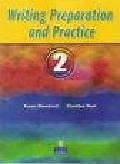 |
|
| Publisher: | New York: Pearson Education | ||
| Pages | ISBN | Price | |
|---|---|---|---|
| Pp. iv + 177 |
ISBN 0-13-199556-1 ISBN 0-13-240048-0 (Answer Key) |
$32.00 U.S | |
Writing Preparation and Practice 2, aimed at high-beginner and low-intermediate learners, adopts a process writing approach to familiarize learners with writing paragraphs in different genres. Taking learners’ language proficiency into account, the book focuses on writing a paragraph instead of an essay, and the chosen vocabulary is at an appropriate level.
The book comprises two main parts, each of which has a clear purpose. The first part, Chapters 1-7, aims at giving learners a full picture of a paragraph’s key elements and shows how to organize information as well as use evidence to support the paragraph’s main idea. In addition to teaching about topic sentences, supporting sentences and concluding sentences, the book also offers three ways to organize information in a paragraph. The last goal addresses a common problem that occurs in ESL/EFL learners’ compositions: the information is organized poorly. Learners usually have a lot of ideas in their minds, but they often struggle to put the information in logical order. The chapters on organization (3-5) are quite helpful because learners can apply the three kinds of organization to almost every genre.
Chapter 7, “Supporting the Main Idea,” is another valuable chapter in the book’s first part, and not only because the topic is seldom covered in other writing textbooks. It introduces three sources for supporting a paragraph’s main idea: personal experience, facts and statistics, and quotations. Students who write arguments without providing supporting evidence will appreciate the help this chapter offers. Recognizing early on in their academic careers the need for supporting evidence, students will not be surprised when they encounter the increasing role that graphs, charts, and citations play in courses they will take later.
After equipping students with basic paragraph-writing skills, the authors, in the book’s second part, present a wide variety of genres in which learners can put into practice what they have been taught. Chapters 8-14 provide learners with writing tasks within a range of genres: giving instructions, writing descriptions, expressing an opinion, comparing and contrasting, writing about causes and effects, writing personal and business letters, and writing summaries. More concretely, Chapter 8, “Giving Instructions,” teaches how to write instructions step by step by applying the three types of organization mentioned in the book’s first part. In Chapter 13, “Writing Personal and Business Letters,” learners are introduced to the difference between formal and informal styles of writing a letter and the format of a letter and an envelope. I found Chapter 13 especially helpful in raising awareness among student writers of the importance of audience expectations.
It is an appropriate and smart choice to put “Writing Summaries” in the last chapter. Summary writing might be the most difficult genre covered in the book, because learners have to comprehend the reading material, grab the important information, and then incorporate it into their text in reasonable order. Summary writing requires learners to synthesize what they have learned in this book and to apply those skills to organizing a summary, an essential component of academic writing. In addition, the chapter introduces two types of tasks. The first task, directly related to summary writing, asks learners to discover the main ideas in a news article and summarize them. In searching for the main ideas, learners would avoid focusing on the trivial details or unknown words, thus understanding the text more quickly.
The other type of task synthesizes all the guidelines of the previous chapters and helps students practice testing strategies. First, students are asked to construct topic sentences based on a test prompt; then, to write a one-paragraph comparison/contrast summary based on two given paragraphs, one describing characteristics of an eye and one a camera (p. 167). In choosing this type of exercise, Blanchard and Root may be hoping to familiarize lower-level learners with potential test questions before they encounter them in demanding academic courses. An admirable goal, but more than one practice should have been included to drive their point home.
Blanchard and Root adopt the process-writing approach in their assignments, with almost every task including three phases: pre-writing, writing, and revising. Also, tasks within each chapter vary between individual free/guided writings and pair or group activities. If time is a concern in a class or students complain of tasks being too similar, teachers can pick and choose among the variety of tasks. Teachers might also ask students to select the activities and topics they like. Thus, students would not only practice writing through different activities but might also become more motivated if they can choose their own tasks.
A practice section at the end of each chapter is called “You Be the Editor,” which could be very helpful for learners. By acting as editors/proofreaders, students might pay more attention to issues such as spelling, punctuation, organization, and overall format – and learn to shift their focus from content. With practice, learners might be able to examine an article for different aspects of writing as well as to pay attention to these aspects in their own compositions. Teachers could make good use of “You Be the Editor” by asking learners to practice editing by themselves and then to discuss their revisions with peers or the whole class afterwards.
Beyond the advantages of this book I have two suggestions that would have made it even better. First, there are so many practice exercises there is not much room for ootexample paragraphs. Accomplished models for students to analyze might also give a faltering student writer something to fall back on during his own composing process. The other suggestion pertains to the Teacher’s Answer Key. In it only answers to guided practices are given. It would have been more useful for teachers if some pedagogical advice had been included as well. For example, the authors could have listed several techniques for approaching a particular genre. Also, they might have offered some outside resources for supplementary materials.
Writing Preparation and Practice 2 equips high-beginning and low-intermediate learners with basic yet necessary paragraph-writing skills. It is a useful writing textbook worth TESOL practitioners taking a look at.
Ju Chuan Huang
University at Buffalo, SUNY
<jh228 buffalo.edu>
|
© Copyright rests with authors. Please cite TESL-EJ appropriately. Editor’s Note: The HTML version contains no page numbers. Please use the PDF version of this article for citations. |