

September 2008 — Volume 12, Number 2
|
|||
| Author: | Robert O’Dowd, Ed. (2007) | 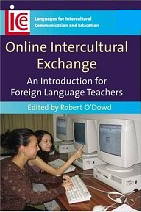 |
|
| Publisher: | Clevedon, UK: Multilingual Matters, Ltd. | ||
| Pages | ISBN | Price | |
|---|---|---|---|
| Pp. xvii + 286 | ISBN 978-1-84769-008-1 (paper) | £ 24.95 UK |
|
The Internet has opened new vistas of opportunity for educators. However, as with the many technological innovations which have (come and) gone before, there is a danger that practitioners will be left behind through fear or carried away by a technology’s possibilities at the expense of sound pedagogy. This edited collection is a rigorous exploration of one particular type of educational exchange, one which should help language teachers and technologists alike get the most out of language learners.
The book is divided into four sections. The editor, Robert O’Dowd, writes two introductory chapters for section one. Section two outlines the three models of online intercultural exchange: eTandem, Cultura and eTwinning. The third section looks at particular practice and theory issues, and the book concludes with a set of short case studies.
As O’Dowd emphasizes in the opening chapter, collaboration is not a new idea. Celestin Freinet was exchanging student produced newspapers across France in the 1920s (p. 5), and in 1979 G.W. Allport attempted what he dubbed “social traveling,” the bringing together of groups usually kept apart through geography and social hierarchy (p. 5). What is new, however, is the ease of communication facilitated by social networking software and broadband connections. In the second chapter O’Dowd moves on from past cultural interchange models into present and future ones, setting up the rest of the book neatly.
Breffni O’Rourke contributes what is probably the standout chapter of the book: his précis of eTandem, one of the three models of telecollaboration offered to us in the book. As is often the case with edited works on a fairly narrow topic, each author needs to set the context and define terms at the outset of his or her chapter. This is an academic necessity, but does become repetitive to the reader. O’Rourke probably benefits from going first, but he also has a beautiful writing style which sets his chapter apart. For example, the way he places us in the shoes of a secondary school student for her first experience of ‘real’ French is marvelously evocative: "people actually chatting, arguing, joking—chaotically, fluently, above all incomprehensibly—in a language that in school seemed to have all the vitality and contemporary relevance of Classical Greek" (p. 41).
There are a number of ways one might classify telecollaboration: the technology used, the language selected, the level and method of teacher involvement, the educational goal. After reading the three chapters outlining the three telecollaboration models covered in this collection, the distinctions among them are not clear.
| eTandem | Cultura | eTwinning |
|---|---|---|
| A learner autonomy based model, in which two learners from different L1/cultural backgrounds pair up and take roles as learner and expert to support each other’s learning. The structure and content of the learning is not prescribed. | A culturally based model in which groups of learners compare one another’s cultures (although it is important that the teacher/facilitator steer the students away from relativism). Through comparison it is hoped that students will see their own culture from a new perspective. | A European project ‘twinning’ schools across the continent, to foster a shared European identity, develop cross-cultural awareness and celebrate diversity. Within the framework of the project portal, the pedagogical methodology is not prescribed. |
All three chapters look at balancing language and culture in practice. The first two also stress the importance of setting clear learning goals and rules of engagement before embarking on a project. However, the eTandem model is tailored to meet the particular needs of a pair of learners through negotiation, whereas the Cultura model is a clearly outlined, pre-designed process. I wonder if it might have been better to focus on the similarities among the technologies and consider each as a variation on one model. The third model, as an established international framework, is the only one of the three in which the technological aspect is clearly described. The first two models, on the other hand, focus on the teaching methodology and mention technology only as a facilitating tool: the options for achieving the eLearning’s aims with the technology are open to the teacher (some assistance is offered in this area in a later chapter). As all three models have similar goals I finished reading this second section unsure of exactly why it was necessary to classify them in this fashion.
The central section of the book focuses on a number of variables, both the practical (selection of tools, management of exchanges) and the outcome based (developing intercultural competence or language form). Each chapter grounds itself firmly in the body of appropriate academic research, yet also draws on the classroom experience of each contributor to add empirical credibility. As a language teacher of university students, I found the first chapter of the section, on peer grammar feedback, particularly helpful. It highlighted how much effort a teacher has to make to remain hands off, how well coached learners need to be to interact with their counterparts sensitively and usefully, yet how motivating the project can be if successful.
The final section contains a selection of short case studies which spotlight particular projects in different contexts. All studies forgo lengthy theoretical examinations in favor of straight factual accounts—not a criticism by any means. They add a great deal to the book by providing the reader concrete settings in which to apply the examinations of the issues and ideas in the previous three sections.
The treatment of technology in O’Dowd’s collection is general enough to stay current for a few years yet, and the mantra of many teachers and researchers in the field that “technology is not a panacea for good pedagogy” is observed carefully throughout. Any teacher considering using "social software" to connect his or her class with others could find this book fascinating reading. It describes itself as an introduction, and the extensive bibliography demonstrates that there is a great deal more to read out there. But after reading this compilation, teachers will have a good idea of whether online exchange might work for them, which approach they should take, and how to prepare.
Darren Elliott
Nanzan University, Nagoya
<delliott nanzan-u.ac.jp>
|
© Copyright rests with authors. Please cite TESL-EJ appropriately. Editor’s Note: The HTML version contains no page numbers. Please use the PDF version of this article for citations. |