• Skip to primary navigation
  • Skip to main content

site logo
The Electronic Journal for English as a Second Language
search
  • Home
  • About TESL-EJ
  • Vols. 1-15 (1994-2012)
    • Volume 1
      • Volume 1, Number 1
      • Volume 1, Number 2
      • Volume 1, Number 3
      • Volume 1, Number 4
    • Volume 2
      • Volume 2, Number 1 — March 1996
      • Volume 2, Number 2 — September 1996
      • Volume 2, Number 3 — January 1997
      • Volume 2, Number 4 — June 1997
    • Volume 3
      • Volume 3, Number 1 — November 1997
      • Volume 3, Number 2 — March 1998
      • Volume 3, Number 3 — September 1998
      • Volume 3, Number 4 — January 1999
    • Volume 4
      • Volume 4, Number 1 — July 1999
      • Volume 4, Number 2 — November 1999
      • Volume 4, Number 3 — May 2000
      • Volume 4, Number 4 — December 2000
    • Volume 5
      • Volume 5, Number 1 — April 2001
      • Volume 5, Number 2 — September 2001
      • Volume 5, Number 3 — December 2001
      • Volume 5, Number 4 — March 2002
    • Volume 6
      • Volume 6, Number 1 — June 2002
      • Volume 6, Number 2 — September 2002
      • Volume 6, Number 3 — December 2002
      • Volume 6, Number 4 — March 2003
    • Volume 7
      • Volume 7, Number 1 — June 2003
      • Volume 7, Number 2 — September 2003
      • Volume 7, Number 3 — December 2003
      • Volume 7, Number 4 — March 2004
    • Volume 8
      • Volume 8, Number 1 — June 2004
      • Volume 8, Number 2 — September 2004
      • Volume 8, Number 3 — December 2004
      • Volume 8, Number 4 — March 2005
    • Volume 9
      • Volume 9, Number 1 — June 2005
      • Volume 9, Number 2 — September 2005
      • Volume 9, Number 3 — December 2005
      • Volume 9, Number 4 — March 2006
    • Volume 10
      • Volume 10, Number 1 — June 2006
      • Volume 10, Number 2 — September 2006
      • Volume 10, Number 3 — December 2006
      • Volume 10, Number 4 — March 2007
    • Volume 11
      • Volume 11, Number 1 — June 2007
      • Volume 11, Number 2 — September 2007
      • Volume 11, Number 3 — December 2007
      • Volume 11, Number 4 — March 2008
    • Volume 12
      • Volume 12, Number 1 — June 2008
      • Volume 12, Number 2 — September 2008
      • Volume 12, Number 3 — December 2008
      • Volume 12, Number 4 — March 2009
    • Volume 13
      • Volume 13, Number 1 — June 2009
      • Volume 13, Number 2 — September 2009
      • Volume 13, Number 3 — December 2009
      • Volume 13, Number 4 — March 2010
    • Volume 14
      • Volume 14, Number 1 — June 2010
      • Volume 14, Number 2 – September 2010
      • Volume 14, Number 3 – December 2010
      • Volume 14, Number 4 – March 2011
    • Volume 15
      • Volume 15, Number 1 — June 2011
      • Volume 15, Number 2 — September 2011
      • Volume 15, Number 3 — December 2011
      • Volume 15, Number 4 — March 2012
  • Vols. 16-Current
    • Volume 16
      • Volume 16, Number 1 — June 2012
      • Volume 16, Number 2 — September 2012
      • Volume 16, Number 3 — December 2012
      • Volume 16, Number 4 – March 2013
    • Volume 17
      • Volume 17, Number 1 – May 2013
      • Volume 17, Number 2 – August 2013
      • Volume 17, Number 3 – November 2013
      • Volume 17, Number 4 – February 2014
    • Volume 18
      • Volume 18, Number 1 – May 2014
      • Volume 18, Number 2 – August 2014
      • Volume 18, Number 3 – November 2014
      • Volume 18, Number 4 – February 2015
    • Volume 19
      • Volume 19, Number 1 – May 2015
      • Volume 19, Number 2 – August 2015
      • Volume 19, Number 3 – November 2015
      • Volume 19, Number 4 – February 2016
    • Volume 20
      • Volume 20, Number 1 – May 2016
      • Volume 20, Number 2 – August 2016
      • Volume 20, Number 3 – November 2016
      • Volume 20, Number 4 – February 2017
    • Volume 21
      • Volume 21, Number 1 – May 2017
      • Volume 21, Number 2 – August 2017
      • Volume 21, Number 3 – November 2017
      • Volume 21, Number 4 – February 2018
    • Volume 22
      • Volume 22, Number 1 – May 2018
      • Volume 22, Number 2 – August 2018
      • Volume 22, Number 3 – November 2018
      • Volume 22, Number 4 – February 2019
    • Volume 23
      • Volume 23, Number 1 – May 2019
      • Volume 23, Number 2 – August 2019
      • Volume 23, Number 3 – November 2019
      • Volume 23, Number 4 – February 2020
    • Volume 24
      • Volume 24, Number 1 – May 2020
      • Volume 24, Number 2 – August 2020
      • Volume 24, Number 3 – November 2020
      • Volume 24, Number 4 – February 2021
    • Volume 25
      • Volume 25, Number 1 – May 2021
      • Volume 25, Number 2 – August 2021
      • Volume 25, Number 3 – November 2021
      • Volume 25, Number 4 – February 2022
    • Volume 26
      • Volume 26, Number 1 – May 2022
      • Volume 26, Number 2 – August 2022
      • Volume 26, Number 3 – November 2022
      • Volume 26, Number 4 – February 2023
    • Volume 27
      • Volume 27, Number 1 – May 2023
      • Volume 27, Number 2 – August 2023
      • Volume 27, Number 3 – November 2023
      • Volume 27, Number 4 – February 2024
    • Volume 28
      • Volume 28, Number 1 – May 2024
      • Volume 28, Number 2 – August 2024
      • Volume 28, Number 3 – November 2024
      • Volume 28, Number 4 – February 2025
    • Volume 29
      • Volume 29, Number 1 – May 2025
      • Volume 29, Number 2 – August 2025
      • Volume 29, Number 3 – November 2025
      • Volume 29, Number 4 – February 2026
    • Volume 30
      • Volume 30, Number 1 – May 2026
      • Volume 30, Number 2 – August 2026
  • Books
  • How to Submit
    • Submission Info
    • Ethical Standards for Authors and Reviewers
    • TESL-EJ Style Sheet for Authors
    • TESL-EJ Tips for Authors
    • Book Review Policy
    • Media Review Policy
    • TESL-EJ Special issues
    • APA Style Guide
  • Editorial Board
  • Support

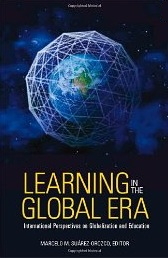
Learning in the Global Era: International Perspectives on Globalization and Education

December 2010 – Volume 14, Number 3

Learning in the Global Era:
International Perspectives on Globalization and Education

Author: Marcelo M. Suárez-Orozco (Ed.) (2007)  
Publisher: University of California Press
Pages ISBN Price
Paperback, 335 pages 9780520254367 $23.95 US

Learning in the Global Era: International Perspectives on Globalization and Education is an eclectic collection of 13 (14 if you count the lengthy introduction) articles related to global education. Published in 2007, the information and data, and there is a lot of raw data, is relatively fresh and applicable to today’s issues and concerns on a variety of global education related topics.

Learning in the Global Era is divided into three main parts. The first part deals with Interdisciplinary Approaches to Learning and Understanding in the Global Era. It contains four articles ranging from Teaching Globalization to Neurobiology. This section “examine[s] the function and responsibilities of schools to equip all youth with the skills and knowledge required to lead successful lives in increasingly complex, globally linked twenty-first-century societies.”

The second part deals with Learning and the Functions of Education in a Changing Global Economy. It also contains four articles ranging from women’s schooling to computerization. This section is “a sample of basic research on the relationships between education in formal settings and rapidly changing economies and societies in the twenty-first-century.”

The third part deals with Learning, Immigration and Integration. It contains five articles on wide range of topics, from honor and human rights to integration of immigrant youth. This section illustrates the “changes [that] represent an important challenge and have implications not only for immigration controls but also for social, economic, and educational integration policies.”

Learning in the Global Era has one of the most complete introductions that I have ever seen. It is almost twice as long as any of the actual chapters, but it does a very thorough job of explaining each and every chapter. It does this so well, in fact, I would suggest ripping it out if you plan to test anybody on this book because it is essentially built in Cliff Notes, allowing the lazy reader to circumvent reading the actual chapters altogether. The first part goes on quite a bit about the importance and inequality of education around the world, hence the need to read the book, but it is well labeled and worth glancing at to help orientate you with the rest of the book.

Learning in the Global Era provides a plethora of useful and interesting charts, graphs and tables. While not every article contains one of these visual aids, they are scattered about as needed, including a fascinating chart in the appendix dividing the world into high, middle and low income countries.

My own hesitation with this book is that I did not feel that it flowed well and, indeed, there is very little consistency in either style or format. I guess that is to be expected from a book with 20 authors, but I found it to be bit jarring at times. One minute I would be reading an article with nice flow and pacing, only to have it abruptly change at the start of a new chapter. While the book tries to organize itself into three sections, as previously mentioned, these sections are perhaps too broad and loose.

I came away with the feeling that the book’s publisher just scavenged the 13 best articles from a year’s worth of Global Education scholarship without too much regard for how well they fit together or complemented each other. I wouldn’t go as far as to say that anything in any of the articles contradicted each other, but there was obviously limited collaboration between the individual authors and I wished the book had been more upfront about this so I would know what to expect rather than have to figure it out for myself three confusing chapters in (I originally skipped reading the introduction because of its length, which turned out to be a big mistake).

That having been said, this book is a diamond mine of information on learning in the global era, by which I mean you have to dig your way through the academic jargon to claim the shiny pieces of greater knowledge and enlightenment. This book was written by academics for academics, which is perfectly acceptable in the academic world, but I wish the cover of the book had “Non-Academics Beware” stamped across it somewhere so the reader would have some forewarning about what they are about to get themselves involved in. It is by no means a light read and should be approached with all attitude of “no pain, no gain.”

However, I suppose one of the advantages of having so many different authors is that not all the chapters are as heavy reading as the rest. In fact, Learning in the Global Era is one of the few books that I have read that actually gets easier as you go along. The front end, especially the introduction and the first section (four chapters) is easily the heaviest reading, while, with a few exceptions, the reading picks up pace and is a little lighter the further on you go.

My final recommendation is that Learning in the Global Era is well worth the effort of reading for any ELS teacher or any teacher dealing with an international population of any sort. It reminds me of the old saying “the more you learn, the less you know.” Reading this book introduced me to issues and ideas that I didn’t even know existed. You can’t ask questions about something you never knew was there in the first place. Learning in the Global Era is a starting point for educators’ exploring new horizons of understanding and possibilities.

Reviewed by

John Eckert
EFL Educator, Riyhad Saudi Arabia
<john.eckertatmarkhotmail.com>

© Copyright rests with authors. Please cite TESL-EJ appropriately.

Editor’s Note: The HTML version contains no page numbers. Please use the PDF version of this article for citations.

© 1994–2026 TESL-EJ, ISSN 1072-4303
Copyright of articles rests with the authors.