• Skip to primary navigation
  • Skip to main content

site logo
The Electronic Journal for English as a Second Language
search
  • Home
  • About TESL-EJ
  • Vols. 1-15 (1994-2012)
    • Volume 1
      • Volume 1, Number 1
      • Volume 1, Number 2
      • Volume 1, Number 3
      • Volume 1, Number 4
    • Volume 2
      • Volume 2, Number 1 — March 1996
      • Volume 2, Number 2 — September 1996
      • Volume 2, Number 3 — January 1997
      • Volume 2, Number 4 — June 1997
    • Volume 3
      • Volume 3, Number 1 — November 1997
      • Volume 3, Number 2 — March 1998
      • Volume 3, Number 3 — September 1998
      • Volume 3, Number 4 — January 1999
    • Volume 4
      • Volume 4, Number 1 — July 1999
      • Volume 4, Number 2 — November 1999
      • Volume 4, Number 3 — May 2000
      • Volume 4, Number 4 — December 2000
    • Volume 5
      • Volume 5, Number 1 — April 2001
      • Volume 5, Number 2 — September 2001
      • Volume 5, Number 3 — December 2001
      • Volume 5, Number 4 — March 2002
    • Volume 6
      • Volume 6, Number 1 — June 2002
      • Volume 6, Number 2 — September 2002
      • Volume 6, Number 3 — December 2002
      • Volume 6, Number 4 — March 2003
    • Volume 7
      • Volume 7, Number 1 — June 2003
      • Volume 7, Number 2 — September 2003
      • Volume 7, Number 3 — December 2003
      • Volume 7, Number 4 — March 2004
    • Volume 8
      • Volume 8, Number 1 — June 2004
      • Volume 8, Number 2 — September 2004
      • Volume 8, Number 3 — December 2004
      • Volume 8, Number 4 — March 2005
    • Volume 9
      • Volume 9, Number 1 — June 2005
      • Volume 9, Number 2 — September 2005
      • Volume 9, Number 3 — December 2005
      • Volume 9, Number 4 — March 2006
    • Volume 10
      • Volume 10, Number 1 — June 2006
      • Volume 10, Number 2 — September 2006
      • Volume 10, Number 3 — December 2006
      • Volume 10, Number 4 — March 2007
    • Volume 11
      • Volume 11, Number 1 — June 2007
      • Volume 11, Number 2 — September 2007
      • Volume 11, Number 3 — December 2007
      • Volume 11, Number 4 — March 2008
    • Volume 12
      • Volume 12, Number 1 — June 2008
      • Volume 12, Number 2 — September 2008
      • Volume 12, Number 3 — December 2008
      • Volume 12, Number 4 — March 2009
    • Volume 13
      • Volume 13, Number 1 — June 2009
      • Volume 13, Number 2 — September 2009
      • Volume 13, Number 3 — December 2009
      • Volume 13, Number 4 — March 2010
    • Volume 14
      • Volume 14, Number 1 — June 2010
      • Volume 14, Number 2 – September 2010
      • Volume 14, Number 3 – December 2010
      • Volume 14, Number 4 – March 2011
    • Volume 15
      • Volume 15, Number 1 — June 2011
      • Volume 15, Number 2 — September 2011
      • Volume 15, Number 3 — December 2011
      • Volume 15, Number 4 — March 2012
  • Vols. 16-Current
    • Volume 16
      • Volume 16, Number 1 — June 2012
      • Volume 16, Number 2 — September 2012
      • Volume 16, Number 3 — December 2012
      • Volume 16, Number 4 – March 2013
    • Volume 17
      • Volume 17, Number 1 – May 2013
      • Volume 17, Number 2 – August 2013
      • Volume 17, Number 3 – November 2013
      • Volume 17, Number 4 – February 2014
    • Volume 18
      • Volume 18, Number 1 – May 2014
      • Volume 18, Number 2 – August 2014
      • Volume 18, Number 3 – November 2014
      • Volume 18, Number 4 – February 2015
    • Volume 19
      • Volume 19, Number 1 – May 2015
      • Volume 19, Number 2 – August 2015
      • Volume 19, Number 3 – November 2015
      • Volume 19, Number 4 – February 2016
    • Volume 20
      • Volume 20, Number 1 – May 2016
      • Volume 20, Number 2 – August 2016
      • Volume 20, Number 3 – November 2016
      • Volume 20, Number 4 – February 2017
    • Volume 21
      • Volume 21, Number 1 – May 2017
      • Volume 21, Number 2 – August 2017
      • Volume 21, Number 3 – November 2017
      • Volume 21, Number 4 – February 2018
    • Volume 22
      • Volume 22, Number 1 – May 2018
      • Volume 22, Number 2 – August 2018
      • Volume 22, Number 3 – November 2018
      • Volume 22, Number 4 – February 2019
    • Volume 23
      • Volume 23, Number 1 – May 2019
      • Volume 23, Number 2 – August 2019
      • Volume 23, Number 3 – November 2019
      • Volume 23, Number 4 – February 2020
    • Volume 24
      • Volume 24, Number 1 – May 2020
      • Volume 24, Number 2 – August 2020
      • Volume 24, Number 3 – November 2020
      • Volume 24, Number 4 – February 2021
    • Volume 25
      • Volume 25, Number 1 – May 2021
      • Volume 25, Number 2 – August 2021
      • Volume 25, Number 3 – November 2021
      • Volume 25, Number 4 – February 2022
    • Volume 26
      • Volume 26, Number 1 – May 2022
      • Volume 26, Number 2 – August 2022
      • Volume 26, Number 3 – November 2022
      • Volume 26, Number 4 – February 2023
    • Volume 27
      • Volume 27, Number 1 – May 2023
      • Volume 27, Number 2 – August 2023
      • Volume 27, Number 3 – November 2023
      • Volume 27, Number 4 – February 2024
    • Volume 28
      • Volume 28, Number 1 – May 2024
      • Volume 28, Number 2 – August 2024
      • Volume 28, Number 3 – November 2024
      • Volume 28, Number 4 – February 2025
    • Volume 29
      • Volume 29, Number 1 – May 2025
      • Volume 29, Number 2 – August 2025
      • Volume 29, Number 3 – November 2025
      • Volume 29, Number 4 – February 2026
    • Volume 30
      • Volume 30, Number 1 – May 2026
  • Books
  • How to Submit
    • Submission Info
    • Ethical Standards for Authors and Reviewers
    • TESL-EJ Style Sheet for Authors
    • TESL-EJ Tips for Authors
    • Book Review Policy
    • Media Review Policy
    • TESL-EJ Special issues
    • APA Style Guide
  • Editorial Board
  • Support

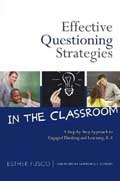
Effective Questioning Strategies in the Classroom: A Step-by-Step Approach to Engaged Thinking and Learning, K-8

May 2013 – Volume 17, Number 1

Effective Questioning Strategies in the Classroom:
A Step-by-Step Approach to Engaged Thinking and Learning, K-8

Author: Esther Fusco (2012)  
Publisher: New York: Teachers College Press
Pages ISBN Price
131 pages 978-0-8077-5329-3 $26.95 USD

Teachers working from a communicative paradigm dream about lively discussions in their classroom—a Socratic way of teaching that stimulates students’ mind and brings synergy to the learning environments where everybody, including the teacher, is talking to learn. Building from her years in the classroom and her related research, Fusco asserts that discussion is the best way to entice students to become reflective and responsible thinkers, and it is teachers’ responsibility to provide them with a solid cognitive foundation that supports critical thinking and problem solving skills. But in reality, a wide gap exists between theory and practice, and teachers (especially in U.S.contexts.) are often afraid of losing lesson time for discussion under the pressure of standardized tests. However, as Fusco explains, exploratory discussion not only boosts community atmosphere in the classroom, but discussion also results in superior test outcomes from students taught with effective questioning methods. To that end, Effective Questioning Strategies is a practical guide for teachers hoping to leverage questions for cognitive development.

Each chapter of this book is structured with three components: Questions in the Classroom, Teacher Reflection, and Action Items. In Questions in the Classroom, Fusco introduces different techniques for asking questions with specific theoretical models such as Bloom’s Taxonomy of Educational Objectives, and Gardener’s Multiple Intelligences. The Teachers’ Reflection section contains real teachers’ thoughts on their own classroom practice with the suggested questioning techniques. Teachers’ testimonials provide readers the feel of real classroom, and open a window to their trials and errors. Action Items at the end of each chapter offer practical guidance for teachers hoping to try out the various questioning techniques.

What I liked the most in this book is the specific examples of classroom interaction showcasing each level of questioning models. Both beginner and experienced teachers can easily follow its steps and modify it to fit in their lessons. Fusco also demonstrates how Gardner’s Multiple Intelligences might be incorporated to Bloom’s Taxonomy Objectives for differentiated instruction. The author also includes metacognitive questions as a planning tool for teachers that can be used for secondary and post-secondary students as well to help them process for what they read. While successful students are reflective on about their learning, less-unsuccessful ones tend not to. For those less-reflective students, Fusco models some metacognitive questions to create a focus, establish a purpose, and make connections to students themselves. Questions range from “what and why am I doing it?” to “what questions do I have?” This is something I have never done in my class; I want to try it soon.

As an instructor of English as a Foreign Language on a large Southern public university campus, I especially appreciate the book’s examples of synthesis and evaluation questions. My students—often from the Middle East—particularly respond well to all activities surrounding dialogue. I always ask students about the title after reading each unit if they think the title was appropriate for the unit. Oftentimes, they want to change it, and the process of discussing why it should be changed demonstrates what they understood. It has been highly positive learning experience for the entire class, and that gives me a chance to assess their understanding. This book is very useful in this context because it contains many different questioning models with specific examples that gradually scaffold students into critical thinking. I am sure that it can be a great help for both experienced and inexperienced teachers when they plan their lessons for every student in their classroom. Although the book’s title signals a K-8 context, I have found it exceedingly useful for stimulating deeper thinking in my post-secondary EFL classroom.

Reviewed by
Maria Lee
English Language Teaching Institute, The University of North Carolina at Charlotte
<mleeatmarkuncc.edu>

© Copyright rests with authors. Please cite TESL-EJ appropriately.Editor’s Note: The HTML version contains no page numbers. Please use the PDF version of this article for citations.

© 1994–2026 TESL-EJ, ISSN 1072-4303
Copyright of articles rests with the authors.