

November 2021 – Volume 25, Number 3
| Title | Newsela |
| Contact Information | support newsela.com newsela.com |
| Type of Product | Literacy-focused Edtech |
| Platform | iOS, Android, PC/MAC, and Windows |
| Hardware Requirements | Smart-device and access to Internet connection |
| Registration | Required |
| Price | Newsela news is free. Newsela pro pricing is dependent on the plan chosen. It can cost up to $6000 per school, $2000 per grade level and $18/student per year. |
Since the 1980s, reading, alongside listening, has been considered as a receptive skill, and the learning process should precede productive skills including speaking and writing in L2 learning (Van Parreren, 1983). However, teaching reading classes and making learners enjoy reading texts in an L2 such as English are not easy tasks. Apart from personal factors including reading habit and motivation, there are differences amongst learners’ target language knowledge that have to be recognized encompassing different levels of vocabulary and grammatical knowledge, which can significantly affect learners’ levels of reading comprehension and enjoyment (Torppa et al., 2020).
In the current situation of COVID-19, most English teachers are required to deliver reading classes online, which has presumably made it more difficult to make learners enjoy reading. This paper, therefore, reviews an online website named Newsela.com that can be an alternative solution for enhancing reading classes, especially in the current online teaching trend. The review provides a general description of the free version of Newsela, starting with a brief overview of the registration process, types of content, and activities by reading levels provided. Then, it evaluates the potential of Newsela.com for English language learning.
General Description
Newsela free version features
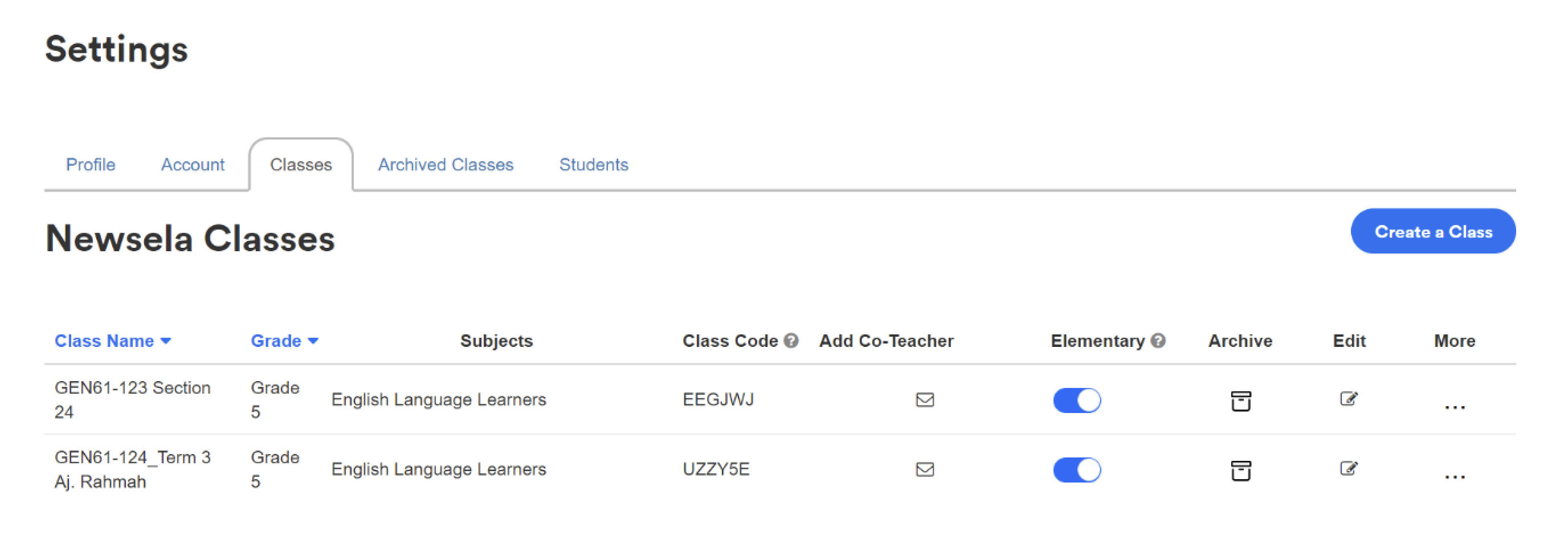
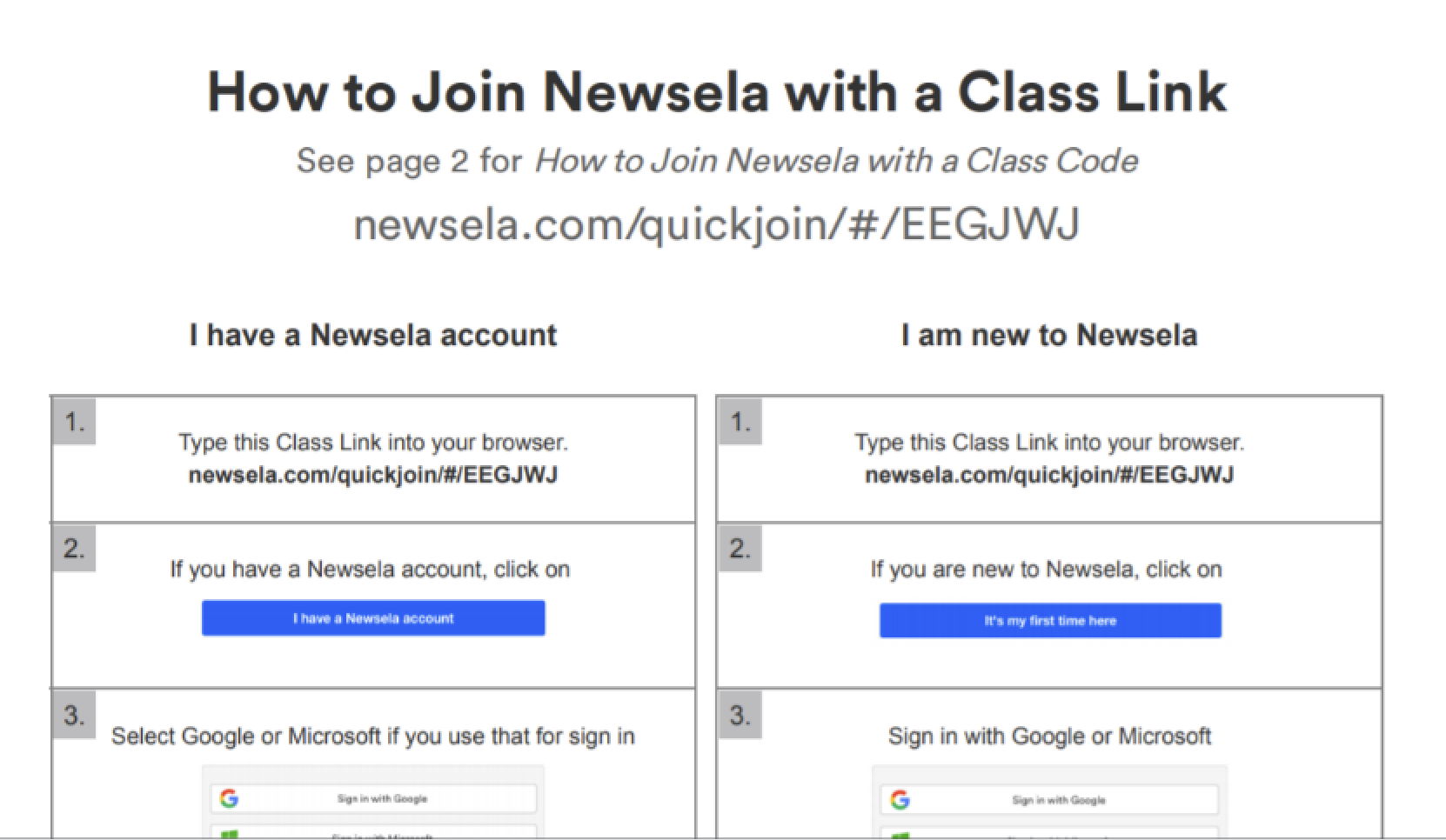
Newsela is a website that provides daily news articles focusing on current events. First, users need to download the application or open the website address and register or log in with an existing account. Users will be asked to provide basic information such as roles (educator or students), school name, and location. Next, users should then be able to access the account. Teachers can create a class by giving the name of the class, choosing the reading ability level, and clicking “more” to add students. They can also share the link and class code with students as shown in Figure 1. It can also be synchronized with Google Classroom.
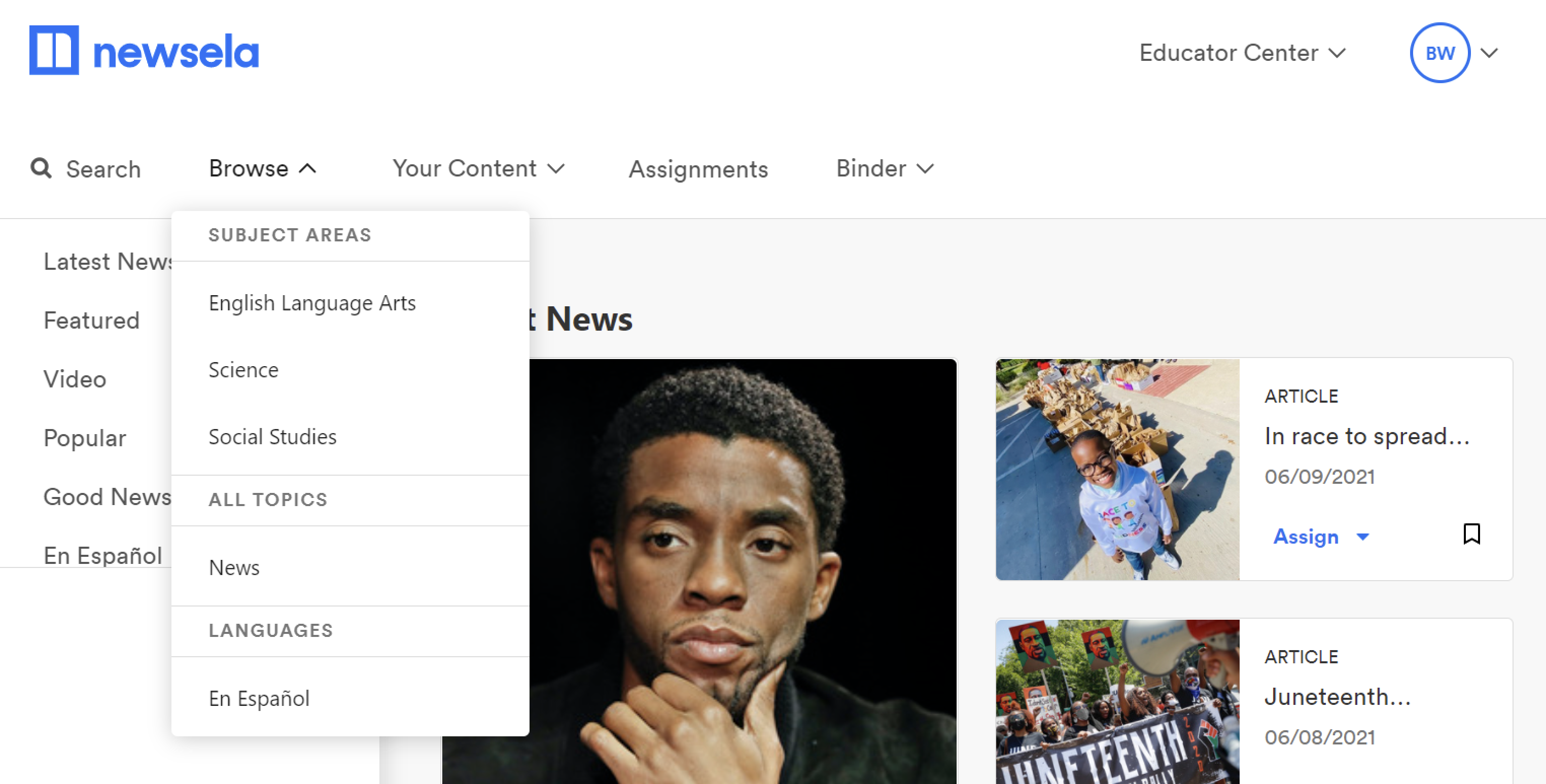
Newsela offers content based on a variety of subject areas (e.g., Science, Social Studies, English Language Area). Users can also use the search tab to look for other topics of interest as displayed in Figure 3.
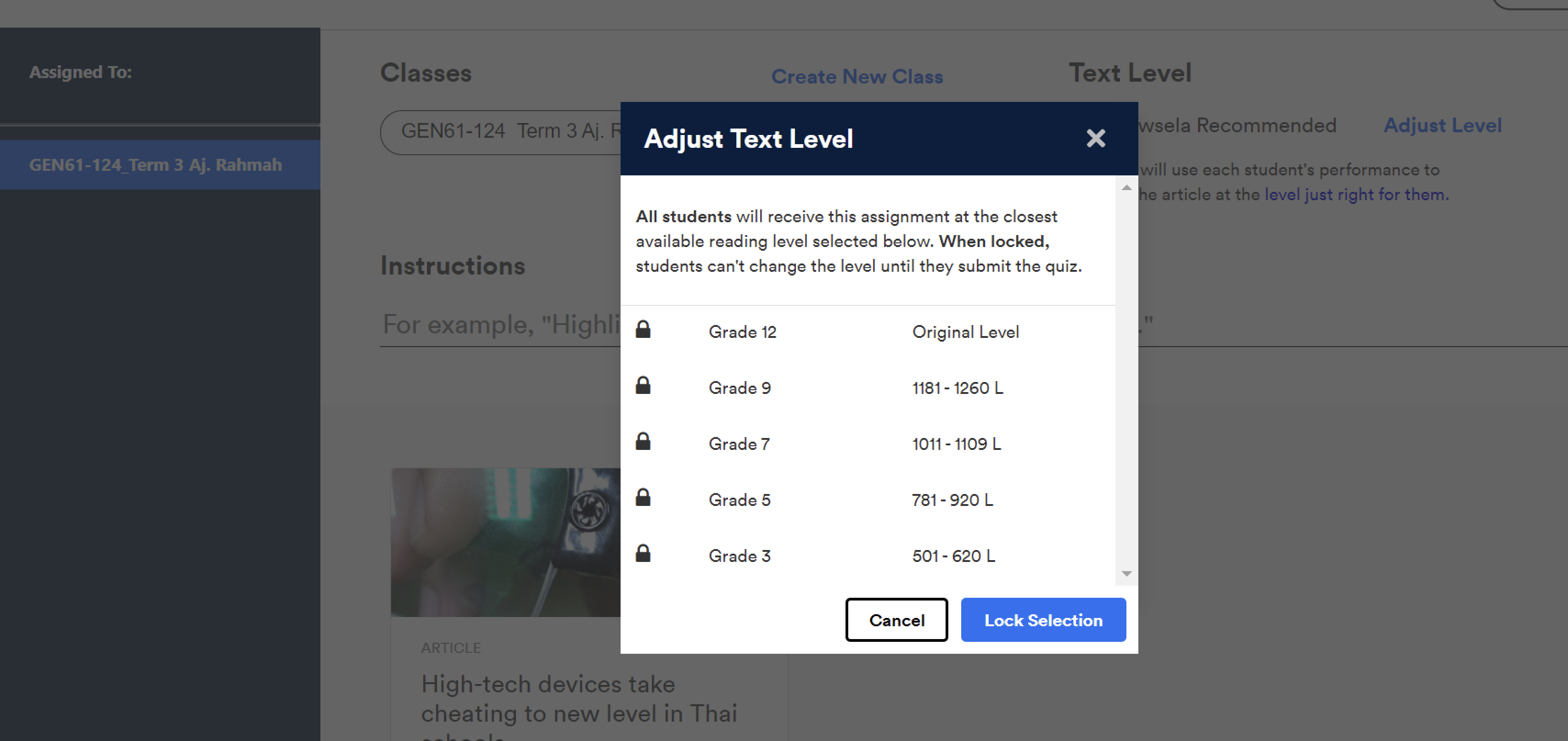
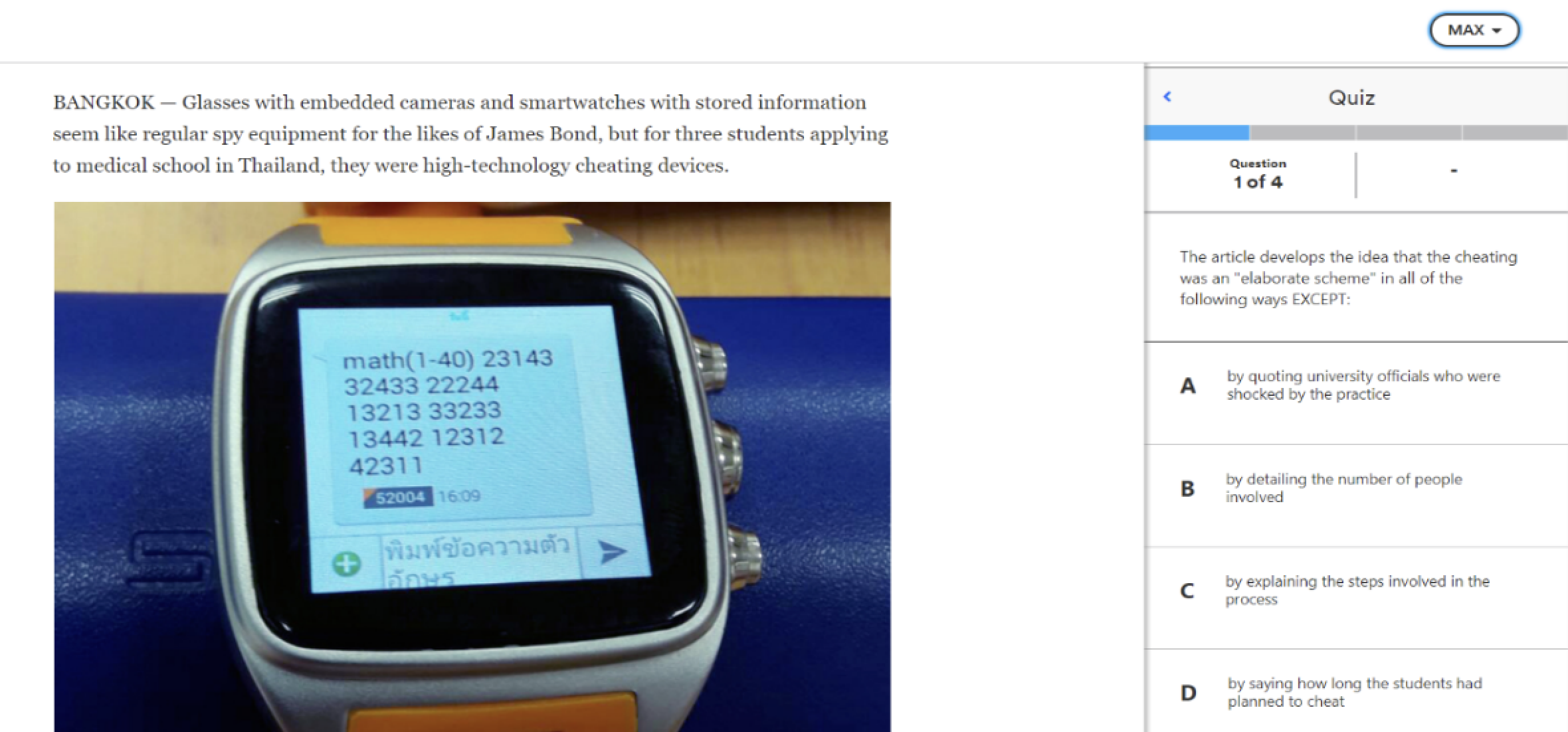
As for assignments or activities, teachers can write specific instructions for students. For instance, they could instruct their students to highlight any unknown words in red. The main activity is the four questions quiz which is autogenerated for each article, as illustrated in Figure 5. The difficulty level of each question is based on the Lexile reading level assigned by the teacher. Teachers can also instruct students to give their responses to the assigned news which will create a writing activity.
Evaluation
Using the framework created by Rosell-Aguilar (2017), this section evaluates the potential use of Newsela.com in English language learning involving four aspects: Technology (e.g., interface, navigation, instruction, stability, etc.), User Experience (e.g., interaction, sharing, advertising, etc.), Pedagogy (e.g., teaching, progress, scaffolding, etc.), and Language Learning (e.g., reading, writing, vocabulary, etc.).
In terms of Technology, Newsela.com offers a user-friendly interface. The website has high-interest news items that are updated daily and are presented in a basic, clean style that emphasizes the content and accompanying graphics. It is simple to use, especially for students. When a teacher assigns a reading assignment, students just go to their Newsela website and view the reading assignment along with the instructor’s instructions. The website is also quite reliable; it seldom freezes or crashes. Additionally, although the website cannot be viewed without access to the internet, it can operate well on a low-bandwidth connection.
For User Experience, this website does not facilitate interactivity among users, thereby promoting passive engagement with the news content. In a class setting, students basically work individually on the assigned reading texts. Nevertheless, this may stimulate students’ autonomy development in reading comprehension and vocabulary development when used in an asynchronous mode of learning or outside the classroom (Hashim & Vongkulluksn, 2018) because Newsela online reading materials enable students to monitor their reading comprehension at their own pace. Besides, teachers can easily share information between classes by selecting the appropriate sharing options. More importantly, even in the free version, users will not get distracted by advertisements as there are no pop-up ads. Therefore, students can completely concentrate on reading the prescribed content, annotating the text, and answering follow-up questions.
Concerning Pedagogy, the news contents cover various topics encompassing social studies, arts, science, math, and others appropriate for a wide range of grade levels starting from kindergarten to grade 12. It does not give pedagogical instructions on how to utilize these news items in reading or vocabulary lessons for instance; rather, it allows teachers to use their creative teaching talents to figure out how to incorporate the news into their classrooms. It supports scaffolding activities where teachers can assign similar texts with different levels of difficulty and vocabulary depending on students’ abilities. One of the pedagogy’s shortcomings is that it does not facilitate the communication of feedback from teachers to students. Hence, teachers may consider holding in-class discussions to provide feedback and collect input from students on the assigned reading texts. Alternatively, teachers can divide students into groups and assign them to discuss the news content.
For Language Learning, Newsela.com is specifically designed for classes utilizing reading texts with vocabulary and writing as the sub-skills. It is a standout resource for supporting students’ nonfiction literacy by facilitating learning not only through current news events but also reading at a specific text level following learners’ level (Drinkwater, 2016). It can also help build students’ vocabulary knowledge and reading ability (Nushi & Fadaei, 2020). Brief comprehension quizzes and writing prompts that follow each news article can serve as a means to check students’ understanding of an assigned text. These assessment features offer a rich, flexible way for students to demonstrate what they have learned, practice their close reading skills, and discuss what they have read. Newsela also promotes learning autonomy because it offers learners the possibility of modifying their reading skills based on their levels. For instance, teachers may require students to achieve perfect scores on the quizzes. If this is not achieved, students can lower their reading level, read the article again, and complete the quiz. Newsela is a great way to add some literacy practice into the classroom, especially for English language learners (ELLs).
Prior to the COVID-19 situations, Newsela had been used and integrated into classroom and outside classroom learning, as elaborated earlier. Now that most English teachers across the globe are conducting online classes, integrating Newsela can offer some benefits for both teachers and students. For teachers, they can have unlimited authentic text materials with various levels and create learning instructions that are suitable to be achieved in the online learning mode. The benefits are not limited to the access and availability of the materials but also the monitoring and evaluation process. Teachers can conduct formative and summative assessments by utilizing the texts and comprehension quizzes. Newsela can trigger the idea of combining synchronous and asynchronous learning. Meanwhile, students are not only able to follow the learning instructions but also able to explore the text materials along with the exercises on their own at home.
Conclusion
Newsela.com is an online news-as-literacy platform that features high-interest articles on everything from current events to myths and legends and from literature to science. Content is updated daily and published at five reading levels, with stories from a wide range of sources mostly in English and also often in Spanish. It is authentic and engaging, providing students’ curiosity with over 10,000 texts across 20+ genres that go deep on any subject. It is all real-world content that allows students to practice accessing the complex texts they can find inside and outside the classroom.
References
Drinkwater, J. (2016). Newsela: Teaching current events in the ESL classroom. Helen Solórzano, 39(2), 66.
Hashim, A. K., & Vongkulluksn, V. W. (2018). E-Reader apps and reading engagement: A descriptive case study. Computers & Education, 125(-), 358-375.
Nushi, M., & Fadaei, M. H. (2020). Newsela: A level-adaptive app to improve reading ability. Reading in a Foreign Language, 32(2), 239-247.
Rosell-Aguilar, F. (2017). State of the app: A taxonomy and framework for evaluating language learning mobile applications. CALICO journal, 34(2), 243-258.
Stenner, A. J., Burdick, H., Sanford, E. E., & Burdick, D. S. (2006). How accurate are Lexile text measures?. Journal of Applied Measurement, 7(3), 307.
Torppa, M., Vasalampi, K., Eklund, K., Sulkunen, S., & Niemi, P. (2020). Reading comprehension difficulty is often distinct from difficulty in reading fluency and accompanied with problems in motivation and school well-being. Educational Psychology, 40(1), 62-81.
Van Parreren, C. (1983). Primacy of receptive skills in foreign language learning. System, 11(3), 249-253.
About the Reviewers
Rahmah Bakoko is a full-time English lecturer at School of Languages and General Education, Walailak University, Thailand. She graduated with an M. Ed degree from Lehigh University, USA under Fulbright Scholarship. Her research interests include English language teaching, multicultural and rural education, gender, interfaith, and international education. <rahmahbakoko gmail.com>
Budi Waluyo is an Assistant Professor of English Language Teaching at the School of Languages and General Education, Walailak University, Thailand. He finished his M.A. at the University of Manchester, U.K. and Ph.D. at Lehigh University, U.S.A. He received International Fellowships Program from Ford Foundation, USA, and Fulbright Presidential Scholarship from the U.S. government. His research interests involve English Language Teaching, Educational Technology, and International Education. <budi.business.waluyogmail.com>
To cite this article
Bakoko. R. & Waluyo, B. (2021). Learning Reading through Current News Events: Newsela.com. Teaching English as a Second Language Electronic Journal (TESL-EJ), 25(3). https://tesl-ej.org/pdf/ej99/m1.pdf
| © Copyright rests with authors. Please cite TESL-EJ appropriately.Editor’s Note: The HTML version contains no page numbers. Please use the PDF version of this article for citations. |