

February 2026 – Volume 29, Number 4
https://doi.org/10.55593/ej.29116r3
English Phonetics and Pronunciation Practice (2nd ed.) |
|||
| Author: | Paul Carley & Inger M. Mees (2024) | 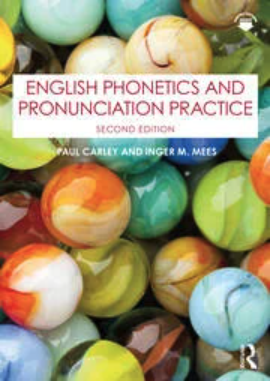 |
|
| Publisher: | London/New York: Routledge | ||
| Pages | ISBN | Price | |
|---|---|---|---|
| Pp. xvii + 158 | 978-1-032-53296-7 978-1-003-41133-8 |
$41.59 U.S. (paper) | |
The second edition of English Phonetics and Pronunciation Practice (EPaPP) by Paul Carley and Inger M. Mees offers a thoroughly updated and methodically reorganized guide to the sounds and rhythm of contemporary British English, with a clear pedagogical orientation. The book, which was first published in 2018 by Carley, Mees, and the late Beverley Collins, has become widely adopted in linguistics and teacher education programs. Since 2018, pronunciation pedagogy has increasingly prioritized intelligibility, functional-load considerations, and L2–L2 interaction. Coupled with sustained classroom adoption and instructor feedback, these shifts have created a clear need for a revised edition that sharpens theory-to-practice connections and broadens coverage of connected speech and prosody. This new edition strengthens the structure, updates content on connected speech and prosody, and is supported by extensive online audio material, thereby confirming its relevance for instructors and learners of English pronunciation worldwide.
The book is designed primarily for undergraduate students of linguistics, novice teachers, and advanced learners of English seeking a structured path toward accurate and natural pronunciation. The model employs a descriptive approach to Standard Southern British English (SSBE), a widely recognized accent frequently utilized in educational settings. The authors’ approach prioritizes intelligibility and communicative clarity over strict adherence to prestige norms. This focus renders the book highly adaptable for global English language teaching contexts, where accent diversity is the norm.
The book is organized into concise chapters that methodically introduce the reader to articulatory phonetics, consonant and vowel systems, syllable structure, allophonic variation, and suprasegmental features such as word stress, rhythm, and intonation. The organization of the material reflects a deliberate approach to pedagogy, with each concept being meticulously explained through the use of diagrams and examples before a set of practical exercises. A significant proportion of these exercises utilize high-frequency vocabulary and natural speech contexts, thereby fostering authentic communicative competence. The incorporation of a variety of perception activities and production tasks enables learners to develop both awareness and fluency toward high intelligibility. The exercises are supported by a comprehensive digital audio bank featuring a range of adult reference voices in SSBE, which encourages self-monitoring and supports blended learning formats. Programs centered on non-SSBE targets may wish to supplement with the companion American English Phonetics and Pronunciation Practice (Carley & Mees, 2020).
This second edition has been reorganized to provide clearer transitions between theoretical content and practical activities, with shorter chapters and full phonemic transcriptions in all practice sections. The book’s treatment of connected speech processes—including linking, assimilation, elision, and weak forms—is particularly thorough and accessible, helping learners move toward more intelligible pronunciation. While intonation and stress patterns are covered, the book’s primary focus remains on segmental accuracy and connected speech, supported by extensive audio materials hosted by the publisher.
A notable strength of the book is its successful integration of linguistic accuracy and pedagogical accessibility. In contrast, reference works such as Gimson’s Pronunciation of English (Cruttenden, 2014) or Practical English Phonetics and Phonology (Collins & Mees, 2019) offer comprehensive coverage, while EPaPP adopts a more targeted approach, presenting only the information essential for mastery at each stage and providing exercises to reinforce key points. The book’s diagrams, International Phonetic Alphabet (IPA) transcriptions, and explanations are suitable for students encountering phonetics for the first time. In addition, the book includes more advanced topics, such as prosodic phrasing and rhythm, which support continued development toward target-like fluency and high intelligibility.
The book also reflects current research in pronunciation pedagogy. Scholars such as Levis (2018) and Hodgetts (2020) have argued for prioritizing intelligibility rather than accent imitation, and EPaPP aligns with this perspective, helping learners focus on high-impact pronunciation features that directly affect listener comprehension. Teachers working in English as a Lingua Franca (ELF) contexts will appreciate this emphasis, as it aligns with evidence-based frameworks that emphasize communicative adequacy and functional load, offering teachers a clear rationale for focusing on the pronunciation features that matter most for cross-cultural comprehension.
Another significant advantage of the book is its integration with a comprehensive audio resource. A considerable number of pronunciation textbooks continue to rely heavily on printed exemplars, necessitating that instructors provide supplementary recordings or demonstrations. In contrast, EPaPP provides meticulously curated audio recordings that encompass every phoneme, allophone, and connected speech feature outlined in the book. The recordings also include extended passages, which encourage learners to apply newly acquired knowledge to authentic speech. This renders the book particularly well-suited for hybrid teacher-education courses in pronunciation and for self-study by trainee teachers, where learners benefit from consistent practice outside class time via the audio resources and keyed exercises.
While the book’s clarity and focus are commendable, it is important to note its limitations. The text’s orientation toward British English is appropriate to its stated remit and typical adoption contexts. However, instructors working toward General American or other English varieties will need to supplement the text with additional materials. The authors have addressed this gap in their companion volume American English Phonetics and Pronunciation Practice (Carley & Mees, 2020), but a brief overview of key cross-varietal differences in this book would further enhance its usefulness. Furthermore, despite the ample and meticulously designed exercises, there is limited guidance on the integration of pronunciation work into a comprehensive curriculum, the assessment of learners’ progress, or the adaptation of tasks for classrooms with mixed proficiency levels. Consequently, teacher-education programs may find it advantageous to integrate EPaPP with resources that explicitly address lesson planning and assessment strategies.
Despite these minor drawbacks, EPaPP should be regarded as a particularly practical and pedagogically effective textbook for pronunciation teaching. The book’s pedagogy is characterized by a deliberate avoidance of extremes, whether theoretical or practical, thereby ensuring a level of depth that fosters learner confidence without overwhelming novices. The incorporation of exercises at each stage of the book ensures its immediate applicability in a classroom setting. Finally, the book’s descriptive emphasis on prosody and connected speech aligns with contemporary trends in the field of TESOL research, highlighting the significance of these elements in fostering intelligibility and naturalness in communication.
For language teachers and teacher-education programs, the book’s modular organization allows it to serve either as the backbone of a dedicated pronunciation syllabus or as a targeted resource within broader English-language courses. Its clear sequencing from explanation to practice, together with transcriptions and an extensive audio bank, supports instructors who may not have specialist phonetics training and facilitates integration of pronunciation work across curricula. For students of English linguistics, the volume offers a rigorous yet accessible foundation in articulatory phonetics and phonology, systematically bridging theory and practice. Finally, for advanced autonomous learners, the step-by-step explanations and resources make it suitable as a structured self-study guide, fostering learner independence and development toward target-like, high-intelligibility outcomes.
Overall, the second edition of English Phonetics and Pronunciation Practice reaffirms its status as a dependable resource rather than a radically innovative contribution. Its strengths abound in its clear explanations, systematic practice design, and well-integrated audio support. The book’s value rests not on novelty but on clarity, organization, and pedagogical consistency, qualities that make it suitable for a wide range of teacher education contexts. Because of its well-judged balance of linguistic precision and practical usability, it is likely to remain a solid choice for undergraduate phonetics courses, teacher training programs, and motivated independent learners.
About the Reviewer
Juan Manuel Castro Carracedo is Associate Professor of Applied Linguistics and English Language Teaching at the Pontifical University of Salamanca, specializing in pronunciation pedagogy, teacher training, and intercultural communication. <jmcastroca@upsa.es> ORCID ID: 0000-0001-6745-0979
To Cite this Review
Castro Carracedo, J. M. (2026). [Review of the book English Phonetics and Pronunciation Practice (2nd ed.) by Paul Carley & Inger M. Mees]. Teaching English as a Second Language Electronic Journal (TESL-EJ), 29 (4). https://doi.org/10.55593/ej.29116r3
References
Carley, P., & Mees, I. M. (2020). American English phonetics and pronunciation practice. Routledge. https://doi.org/10.4324/9780429492228
Collins, B., & Mees, I. M. (2019). Practical English phonetics and phonology (4th ed.). Routledge. https://doi.org/10.4324/9780429490392
Cruttenden, A. (2014). Gimson’s pronunciation of English (8th ed.). Routledge. https://doi.org/10.4324/9780203784969
Hodgetts, J. (2020). Pronunciation instruction in English for Academic Purposes: An investigation of attitudes, beliefs and practices. Springer. https://doi.org/10.1007/978-3-030-56116-1
Levis, J. (2018). Intelligibility, oral communication, and the teaching of pronunciation. Cambridge University Press. https://doi.org/10.1017/9781108241564
| © Copyright rests with authors. Please cite TESL-EJ appropriately. Editor’s Note: The HTML version contains no page numbers. Please use the PDF version of this article for citations. |